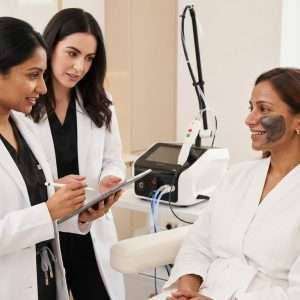
What if the best skincare to complement aesthetic treatments isn’t a more complicated routine, but one that’s carefully matched to your skin and treatment plan? The right products may support your skin, but introducing active ingredients at the wrong time can add irritation or uncertainty, particularly if your skin is already sensitive.
It’s understandable to feel unsure when advice about what to use before or after treatment seems to conflict. Skincare and professional treatments can work alongside one another, but there’s no single routine that suits everyone. Your skin’s needs, the treatment being considered and how your skin responds all matter.
This guide explains the role of daily skincare, what to discuss before starting or changing products, and why pre- and post-treatment guidance should be specific to your plan. At Arden Clinic, skincare planning is considered alongside individual assessment, so your next step can be practical, measured and tailored to you.
Key Takeaways
- Skincare to complement aesthetic treatments should reflect your skin goals and planned treatment, rather than follow a trend.
- Consider how your priorities, such as hydration, uneven pigmentation, acne concerns or texture, shape your routine.
- Bring a clear list of your current products and sensitivities to your treatment discussion.
- Follow personalised guidance on aftercare, including when to pause or restart products.
How skincare complements aesthetic treatments without replacing them
Skincare to complement aesthetic treatments means choosing everyday care that supports your skin goals alongside a professionally selected procedure. Aesthetic medicine covers a broad range of procedures, but skincare and in-clinic treatments have distinct roles. A routine may support general skin care; a professional treatment is planned to address a specific concern. Neither guarantees a particular result, and individual responses vary.
The concern, proposed treatment and your skin’s response all shape the discussion. Someone exploring laser acne treatment in Bradford, for example, should discuss their current routine and skin sensitivities as part of assessment, rather than assume a popular product is suitable. The same principle applies to other treatment plans: choices should relate to the person, not simply to a trend.
What does complementary skincare mean in practice?
It can be a simple, considered selection of products, not a lengthy routine or a collection of strong active ingredients. Professional assessment helps connect skincare choices with the concern being addressed and the treatment being considered. That may mean keeping an existing routine where appropriate, adjusting it, or discussing professional skincare as one option.
Why a treatment plan should include the wider skin routine
Your practitioner can make a more informed assessment when they understand what you already use, how often you use it and whether anything causes discomfort. Share product names or bring photographs of the labels, and mention any known sensitivities. This context can help guide individual advice and aftercare. It doesn’t mean everyone needs professional skincare or identical products.
A supportive skincare routine can complement a treatment plan, but it cannot guarantee a treatment outcome. Keep the discussion practical: explain your goals, describe your current routine and follow advice tailored to your assessment.
How skin concerns and treatment type shape skincare choices
Skincare choices are most useful when they relate to the concern being discussed and the professional treatment under consideration. Hydration needs may prompt a conversation about how to keep the routine comfortable; uneven pigmentation calls for individual assessment; acne concerns and changes in skin texture also need to be considered in context. These are planning considerations, not a diagnosis or a reason to add several products at once.
Skincare choices should reflect the concern, treatment context and your individual skin response, not simply the latest trend. A product that suits one person may not suit another, and the treatment’s purpose helps shape which skincare questions are relevant.
Match the skincare conversation to the concern
Pigmentation can have different presentations, so it shouldn’t automatically lead to the same routine or treatment plan for everyone. Assessment helps clarify the concern and whether a treatment may be appropriate. Arden Clinic’s Pico pigmentation treatment in Bradford is one option considered following individual assessment. Skincare may form part of the wider discussion, but it doesn’t replace that assessment or the treatment itself.
When professional skincare forms part of a wider plan
Professional skincare can be considered alongside treatment where it is relevant to the person’s goals and skin. Obagi Medical is part of Arden Clinic’s professional skincare offering, considered through personalised planning rather than as a standard addition for everyone. A skin-health resource such as a HydraFacial skin treatment guide can also provide related context, but it shouldn’t be taken as a recommendation for an individual plan.
For a tailored discussion of skin concerns, treatment context and suitable next steps, arrange a conversation with Arden Clinic.
A practical skincare checklist before and after an aesthetic treatment
A clear skincare to complement aesthetic treatments plan starts with useful information and ends with aftercare tailored to the procedure. There isn’t one set of instructions for every treatment. Skin response, treatment type and individual circumstances can all affect what is appropriate, so don’t assume you should pause or restart a product on a particular schedule.
Before treatment: prepare useful information
Before your appointment, make a note of your routine and the concerns you want to discuss. You could bring product names or photographs of labels to help make the conversation specific.
- List your current skincare: include how often you use each product.
- Describe sensitivities: mention any products that have caused discomfort or reactions.
- Clarify your goal: explain what you’d like to address without trying to diagnose the cause yourself.
This context helps your practitioner assess your treatment plan and give relevant guidance about your routine.
After treatment: follow individual instructions
Aftercare should match the treatment and your individual response. Generic online routines may not apply to your procedure, so follow the instructions provided by your practitioner. Don’t restart active products or change your routine based on a general timeline. Recovery and suitable skincare can vary. The Morpheus8 treatment information is an example of why it’s useful to consider the specific treatment rather than rely on broad advice.
If an instruction is unclear, or you’re uncertain about how your skin is responding, contact your clinic for guidance before making changes. Clear advice can help you avoid guesswork and keep your aftercare aligned with your treatment.

Build an individualised skincare plan with Arden Clinic
A useful plan starts with your skin goals, the routine you already follow and the treatment being considered. At Arden Clinic, skincare is discussed alongside treatment assessment so recommendations can reflect the full picture, rather than adding products by default. The aim is a considered next step, not a longer routine for its own sake.
What an individualised skincare discussion should cover
Your practitioner can explore what you’d like to address, which products you currently use and how they fit with your treatment plan. This helps identify relevant questions, such as whether your routine needs to be adjusted or whether professional skincare could be appropriate. Suitability and advice are determined through consultation and assessment; the same product or treatment won’t be right for everyone.
Arden Clinic is an established, multi-award-winning clinic founded in 2011. That experience informs an assessment-led approach to skincare to complement aesthetic treatments, with professional skincare and advanced treatments considered as options rather than automatic additions.
Choose a manageable next step
You don’t need to redesign your whole routine before an appointment. Bring a list of your current products, note the skin goals you want to discuss and prepare any questions about how skincare fits with your treatment. From there, your practitioner can help you understand what may be suitable and what to prioritise. A straightforward plan can be easier to follow and review than several changes made at once.
Keep expectations realistic: a skincare recommendation or professional treatment can’t guarantee a particular result, and individual responses vary. Begin with an informed conversation, then make changes in line with the advice given for your skin and treatment context.
Make your next skincare step a considered one
The most useful skincare to complement aesthetic treatments is guided by your skin goals, existing routine and the treatment being considered. Skincare and in-clinic treatments have different roles, so avoid adding products simply because they’re popular. Share your current products and sensitivities, and follow personalised advice about what to use before and after treatment.
Arden Clinic has been established since 2011 and is multi-award-winning, with hundreds of thousands of treatments administered across its services. Individual assessment brings professional skincare and advanced treatments into the discussion where appropriate, without assuming every person needs the same approach. Results vary, and neither a product nor a treatment can guarantee a particular outcome.
A clear conversation is a practical place to begin. Bring your questions and routine, and take the next step with confidence.
Frequently Asked Questions
Can skincare improve the results of aesthetic treatments?
Skincare may support your skin goals alongside a professional treatment, but it can’t guarantee or replace the treatment’s outcome. The role of a routine depends on your concern, the procedure and how your skin responds. Skincare to complement aesthetic treatments should be selected as part of an individual plan, rather than added in the expectation that it will ensure a particular result.
What skincare should I use before an aesthetic treatment?
Follow the preparation advice given for your specific treatment, rather than starting or stopping products based on general online guidance. Before your appointment, share the names of your current skincare products and mention any sensitivities or reactions. This gives your practitioner useful context to assess your routine and explain whether any changes are appropriate for your treatment plan.
When can I restart my usual skincare after an aesthetic treatment?
There isn’t one restart timeline that applies to every treatment or person. Your practitioner’s aftercare instructions should guide when you can resume your usual products, particularly if your routine includes active ingredients. If you’re unsure about a product or how your skin is responding, contact your clinic for advice before using it again. Avoid relying on generic timelines.
Do I need professional skincare to complement aesthetic treatments?
No. A professional skincare range isn’t necessary for everyone, and a suitable plan may involve keeping your routine simple. Your current products, skin goals and treatment context help determine whether professional skincare is worth discussing. Arden Clinic offers assessment-led skincare planning for clients in Bradford, Leeds, Halifax, Keighley and Dewsbury, with recommendations tailored to individual needs.
Can I use the same skincare routine after every aesthetic treatment?
Not necessarily. Aftercare depends on the type of treatment and your individual skin response, so instructions for one procedure may not suit another. Follow the guidance given for your specific appointment, and don’t assume that products used after one treatment are suitable after the next. If advice is unclear, check with your clinic before changing your routine.