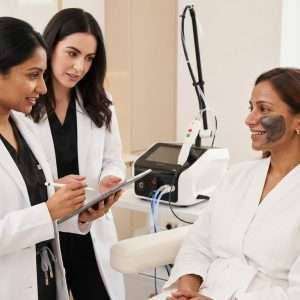
Could a more intensive laser treatment be the wrong starting point for your skin? With CO2 laser skin resurfacing Keighley, the right approach depends on your concerns, skin and how much recovery time you can accommodate, not simply choosing the deepest option.
It’s understandable to want clearer, smoother-looking skin while also considering the recovery involved. Advanced fractional CO₂ resurfacing may improve the appearance of uneven texture, fine lines and some scars, but it isn’t suitable for everyone and results vary. Treatment intensity matters: recovery can differ substantially between light, moderate and deep resurfacing.
This article explains what CO₂ resurfacing may help with, how treatment levels can affect recovery, and why an individual assessment matters before deciding on a next step. Arden Clinic has been established since 2011, and treatment planning is tailored to your skin and circumstances following consultation and assessment.
Key Takeaways
- Fractional CO₂ resurfacing may improve the appearance of concerns such as acne scarring, fine lines and sun damage, although results vary.
- With CO2 laser skin resurfacing Keighley, treatment intensity is tailored, and downtime varies substantially between light, moderate and deep resurfacing.
- Your concerns, goals and recovery needs help guide suitability and treatment planning. An individual assessment is more useful than relying on a checklist alone.
- Find out what to discuss at assessment and how Arden Clinic’s professional medical-centre environment supports a considered next step.
What CO₂ Laser Skin Resurfacing in Keighley May Help Improve
CO2 laser skin resurfacing Keighley uses fractional laser treatment to address selected areas of skin in a controlled pattern. The treatment is intended to support skin renewal and improve the appearance of particular concerns. The approach and intensity are chosen through individual assessment.
Fractional CO₂ resurfacing targets selected areas of skin to support renewal; it is not a surface-only facial treatment. Unlike a facial focused on cleansing or hydration, resurfacing uses laser energy to treat the skin in a controlled pattern. You can read more about Photorejuvenation and CO2 Lasers and the use of lasers in skin treatments.
Which skin concerns may be discussed at an assessment?
An assessment can explore whether resurfacing may be appropriate for concerns such as uneven texture, acne scarring, fine lines, sun damage or stretch marks. Be ready to describe the area you’d like to address and the change you hope to see. This helps the practitioner discuss whether a tailored plan may improve the appearance of that concern. No particular result can be promised.
What fractional resurfacing means in plain English
“Fractional” means the laser treats selected areas, rather than the entire skin surface uniformly. This controlled pattern is intended to support skin renewal, and the treatment approach and intensity are determined as part of individual planning.
CO₂ resurfacing may soften the visible appearance of some scars or signs of sun damage, but it cannot guarantee scar removal or eliminate fine lines. The degree of improvement and recovery experience vary between individuals. An assessment helps set realistic expectations and establish whether resurfacing is suitable for your skin and goals.
How CO₂ Laser Resurfacing Intensity Shapes Treatment and Recovery
CO₂ resurfacing is not a single, uniform procedure. Arden Clinic offers light, moderate and deep treatment levels. An assessment helps determine which approach may suit your skin concerns and goals. The selected intensity shapes both the treatment plan and the recovery experience, so it is worth discussing your work and daily commitments before settling on a plan.
Light, moderate, and deep resurfacing: what differs?
These are distinct levels, not interchangeable options or guaranteed result categories. The table gives a broad guide to how they differ. Your practitioner can explain what each level could mean for your individual plan.
| Level | General approach | Recovery planning |
|---|---|---|
| Light | A less intensive level of resurfacing. | Recovery expectations are considered in relation to this lighter approach. |
| Moderate | A more intensive level than light resurfacing. | Plan for recovery appropriate to the selected level. |
| Deep | The most intensive of these treatment levels. | Recovery planning needs to reflect the greater treatment intensity. |
Resurfacing intensity and recovery expectations are individual. The more intensive the selected level, the more carefully recovery needs to be planned. This is a guide, not a promise about how your skin will respond. The American Society for Dermatologic Surgery’s guide to laser resurfacing also discusses preparation and aftercare.
Why recovery cannot be reduced to one standard timeline
Downtime varies substantially according to treatment intensity, and individual recovery differs too. It wouldn’t be accurate to describe every CO₂ procedure as having the same recovery or as universally minimal. Ask about preparation, aftercare and the recovery considerations for the level being discussed, then plan around the guidance provided for your treatment.
For CO2 laser skin resurfacing Keighley, an individual assessment connects your concerns with a considered treatment level and realistic recovery expectations. You can arrange an assessment with Arden Clinic to discuss your options.
Who May Be Suitable for CO₂ Resurfacing, and What Should You Consider?
Suitability isn’t decided by a checklist alone. Your skin concerns, desired changes and relevant skin history all inform the professional assessment. Be open about what you hope to improve and any previous treatments that may be relevant to planning. Improvement may be possible, but results and recovery differ between individuals, and a particular outcome can’t be guaranteed.
Suitability for CO₂ resurfacing, including treatment depth, is decided individually after considering your skin, goals and recovery needs. For CO2 laser skin resurfacing Keighley, this means discussing an appropriate plan for you rather than choosing an intensity based on a general description.
Questions to discuss before choosing a treatment level
Before your assessment, consider the concern you’d most like to address, the change you’re hoping for and how much recovery time you can realistically accommodate. Share relevant skin history and previous treatments. These details help the practitioner understand your priorities and discuss a suitable approach, including whether light, moderate or deep resurfacing should be considered.
How CO₂ resurfacing differs from Morpheus8
CO₂ resurfacing uses laser energy to renew the skin’s surface in a fractional pattern. Morpheus8 is a different treatment approach that combines microneedling with radiofrequency energy. In a CO₂ vs Morpheus8 discussion, neither is universally better: the relevant option depends on your concerns, goals and professional assessment. Read the Morpheus8 treatment guide for more about that treatment.
During assessment, Arden Clinic’s practitioners can explain the proposed approach and recovery considerations for your individual plan. Raise any questions or concerns so you can make an informed decision without assuming that a deeper level guarantees a better result.

CO₂ Laser Skin Resurfacing in Keighley: Assessment and Next Steps
For readers considering CO2 laser skin resurfacing Keighley, an individual assessment offers a clear starting point. You can explain what you’d like to address and discuss whether resurfacing may be appropriate for your skin and goals.
What an individual assessment helps establish
Your practitioner will consider your main concern, expectations and relevant skin history when discussing a suitable resurfacing level. The process includes:
- Discussing the skin concern and the change you hope to see.
- Having an individual assessment of your skin and suitability.
- Talking through an appropriate treatment level and its recovery considerations.
- Receiving guidance tailored to the agreed plan.
This assessment supports informed, individualised planning. It can’t guarantee a particular result, and expected benefits and recovery vary between people.
How to take the next step from Keighley
If you’re in Keighley, Bradford, Leeds, Halifax or Dewsbury, a treatment discussion can help you weigh up the options before deciding whether CO₂ resurfacing feels right for you. Arden Clinic works within a professional medical-centre environment alongside medical and aesthetic professionals, with an emphasis on appropriate protocols and client safety.
Founded in 2011, Arden Clinic brings extensive treatment experience to its planning. Practitioners have undertaken advanced training with respected doctors, specialists and industry professionals from around the world. Your assessment is an opportunity to ask questions, talk through recovery and understand the reasoning behind a proposed treatment level before making a decision.
Take the Next Step Towards a Personalised Resurfacing Plan
CO₂ laser resurfacing may improve the appearance of concerns such as uneven texture, fine lines and acne scarring, but it isn’t suitable for everyone and results vary. Treatment level matters: recovery differs substantially between light, moderate and deep resurfacing, so it’s important to understand the plan and aftercare that apply to you.
For CO2 laser skin resurfacing Keighley, an individual assessment helps connect your skin concerns and goals with a suitable approach and realistic expectations. Arden Clinic is a multi-award-winning clinic founded in 2011, with hundreds of thousands of treatments administered across its services. Treatment planning is tailored following consultation and assessment.
A discussion with the clinic can help you explore whether resurfacing may be appropriate and what to consider before deciding. The next step is an assessment centred on your individual needs.
Frequently Asked Questions
What is CO₂ laser skin resurfacing used for?
CO₂ laser resurfacing may improve the appearance of uneven skin texture, acne scarring, fine lines, sun damage and stretch marks. Fractional treatment targets selected areas of skin to support renewal, rather than treating the whole surface uniformly. Suitability depends on your skin and goals, and results vary. An assessment helps establish whether resurfacing could be appropriate and what improvement may realistically be possible.
How long is the downtime after CO₂ laser resurfacing?
There isn’t one standard downtime period because recovery varies substantially with treatment intensity. Light, moderate and deep resurfacing involve different treatment levels, and individual recovery differs too. Your practitioner can explain recovery considerations and provide preparation and aftercare guidance tailored to the level selected. Discuss work and daily commitments during assessment so you can consider how treatment may fit your routine.
Is CO₂ laser resurfacing suitable for acne scars?
CO₂ resurfacing may improve the appearance of some acne scars, but suitability depends on your skin, the concern and your goals. It can’t guarantee scar removal or a particular degree of improvement. Discuss your skin history and what you hope to change during an individual assessment. The practitioner can then consider whether resurfacing and a suitable treatment level may be appropriate for you.
Are light and deep CO₂ laser treatments the same?
No. Light and deep resurfacing are different treatment levels, with moderate resurfacing also available. They aren’t interchangeable, and the level chosen affects both the treatment plan and recovery experience. Downtime varies substantially according to intensity, so it’s not accurate to expect the same recovery from every CO₂ procedure. Assessment helps guide an appropriate level based on your concerns, goals and recovery needs.
Can I arrange CO₂ laser skin resurfacing if I live in Keighley?
Yes. Arden Clinic serves clients in Keighley, Bradford, Leeds, Halifax and Dewsbury. Living in Keighley doesn’t determine whether resurfacing is right for you. That depends on an individual assessment of your skin concerns, expectations and relevant history. A treatment discussion can help you understand the possible approach and recovery considerations before deciding whether to proceed.