Skin laxity is a structural change within the skin that develops gradually over time. It is often described as sagging or looseness, but in clinical terms, it reflects a decline in the skin’s ability to maintain firmness, elasticity and support.
This process is not limited to the surface. It involves changes across multiple layers, including the dermis, where collagen and elastin provide strength, and the underlying tissue that contributes to facial shape and definition. As these structures weaken, the skin can begin to lose its natural tension, leading to softer contours around the jawline, cheeks, and neck.
It is also important to distinguish skin laxity from volume loss. While both contribute to visible ageing, volume loss involves changes in fat and bone structure, whereas skin laxity involves changes in the skin’s quality and strength. Many patients experience a combination of both, which is why treatment planning requires a considered, individualised approach.
At Arden Clinic, non-surgical treatments are selected based on how the skin is functioning at different levels. The aim is to support the skin in a way that gradually restores firmness and structure, rather than creating sudden or artificial changes.
Skin Laxity
To understand skin laxity, it is helpful to examine the skin’s structure in more detail. The dermis plays a central role in maintaining firmness. It contains collagen and elastin fibres, which act as a support network, giving the skin strength, flexibility and resilience.
Collagen provides structure and density, while elastin allows the skin to return to its original position after movement. These fibres are produced by specialised cells known as fibroblasts, which are responsible for maintaining and repairing the skin over time.
As the skin ages, fibroblast activity slows and collagen and elastin production decline. Existing fibres also become weaker and less organised. This results in a gradual reduction in skin thickness, elasticity and overall strength.
Skin laxity is therefore not a single change, but a combination of reduced collagen, diminished elasticity and a weakened support network within the dermis. This is why the skin may no longer appear as firm or as responsive as it once was.
Topical skincare can support the skin’s surface, but it does not reach the deeper layers where these structural changes occur. Treatments that stimulate collagen within the dermis are therefore essential when addressing visible laxity.
Causes Of Skin Laxity
Skin laxity develops through a combination of intrinsic and external factors that affect the skin over time.
Intrinsic ageing is a natural process that leads to a gradual decline in collagen production, beginning as early as the mid twenties. As this process continues, the skin becomes thinner, less elastic and slower to repair itself.
External influences can accelerate these changes. Ultraviolet exposure is one of the most significant contributors, as it breaks down collagen within the skin and disrupts its structural integrity. Environmental factors such as pollution can also contribute to oxidative stress, further affecting skin quality.
Structural changes beneath the skin also play a role. Shifts in underlying fat distribution and reduced support from deeper tissues can contribute to a less-defined appearance, particularly in the lower face.
Hormonal changes may influence skin thickness and elasticity, while repeated facial movement and mechanical stress can gradually affect how the skin holds its shape. Weight fluctuations can also stretch the skin, making it more difficult for it to return to its original position.
These factors do not act in isolation. Skin laxity results from cumulative changes in the skin and its supporting structures. Understanding this layered process is key to selecting treatments that address the underlying cause rather than just the visible effect.
Non Surgical Approach To Skin Tightening
Non-surgical skin tightening treatments are designed to support the skin’s natural regenerative processes rather than replace them. Instead of removing or repositioning tissue, these treatments stimulate collagen production and improve skin strength over time.
This approach allows for gradual, progressive improvement that maintains natural facial movement and expression. Results develop in line with the body’s own repair mechanisms, creating outcomes that feel proportionate and balanced.
Modern treatments can target specific depths within the skin, enabling the treatment of structural concerns without invasive procedures. This has shifted the focus of aesthetic medicine towards treatments that enhance skin quality while preserving individual features.
Layered Approach To Skin Laxity
Skin laxity does not occur at a single level. It involves changes across multiple layers, each contributing to the overall appearance of the skin.
The skin’s surface may show changes in texture and tone. Beneath this, the dermis experiences reduced collagen and elastin, affecting firmness. Deeper still, connective tissue and muscle support help maintain facial structure and definition.
Effective treatment often involves addressing more than one of these layers. By combining approaches that target surface quality, dermal strength and underlying support, it is possible to achieve more comprehensive and natural-looking results.
This layered understanding is central to modern treatment planning.
Radiofrequency Microneedling For Skin Laxity
Morpheus8 is designed to target the dermis through a combination of microneedling and controlled radiofrequency energy.
Fine needles create microchannels in the skin while delivering heat to deeper layers. This stimulates collagen production and encourages remodelling of existing collagen fibres. As a result, the skin becomes firmer and more structurally supported over time.
Because the depth and intensity can be adjusted, Morpheus8 can be tailored to different areas and levels of skin laxity. It is commonly used to improve firmness in the cheeks, jawline and neck, while also enhancing overall skin texture.
Focused Ultrasound For Skin Tightening
AccuWave 8D HIFU targets deeper structural layers beneath the skin using focused ultrasound energy.
This treatment stimulates collagen at a level that supports lifting and tightening over time. It is particularly well-suited to areas that require deeper structural support, such as the lower face and neck.
Improvements develop gradually as new collagen forms, resulting in subtle lifting and enhanced definition without altering natural expression.
Facial Muscle Stimulation and Skin Support
Neurolyft Facial EMS Treatment focuses on the underlying muscles that shape the face.
By stimulating muscle activity, this treatment helps improve tone and support, enhancing the overall appearance of the face. While it does not directly treat the skin, it plays an important role in supporting the underlying framework.
When combined with skin-focused treatments, muscle stimulation can contribute to a more defined and balanced result.
Skin Renewal and Surface Strengthening
The eDermastamp Procedure supports the skin’s surface layers by encouraging natural renewal.
Through controlled microneedling, collagen production is stimulated at a more superficial level, improving texture, tone and overall skin quality. This approach is particularly useful in the early stages of skin laxity or as part of a maintenance plan.
Strengthening the skin’s surface complements deeper treatments and contributes to a more refined overall appearance.
Choosing The Right Treatment Approach
Selecting the appropriate treatment requires an understanding of how skin laxity presents at different levels. Some patients may benefit from treatments that focus on deeper structural support, while others may require a combination of approaches.
Factors such as skin condition, age, lifestyle and desired outcomes all influence treatment planning. A personalised approach ensures that treatments are aligned with individual needs rather than applied uniformly.
This level of consideration is essential in achieving results that appear natural and proportionate.
Combining Treatments For Enhanced Results
Combining treatments allows for a more comprehensive approach to skin laxity. By addressing different layers of the skin and underlying structures, it is possible to achieve improvements that would not be possible with a single treatment alone.
For example, deeper collagen stimulation may be combined with surface refinement, while muscle support enhances overall structure. This integrated approach reflects a more advanced understanding of how the face and skin function together.
Results are often more balanced, with improvements in both firmness and overall skin quality.
Treatment Experience and Recovery
Non-surgical treatments are designed to fit within everyday life. Most procedures are well tolerated, with minimal discomfort and limited downtime.
Following treatment, the skin may appear slightly red or feel warm, but this typically settles within a short period. Patients are usually able to return to normal activities quickly.
Following appropriate aftercare supports optimal results and helps maintain skin health throughout the treatment process.
Results and Skin Improvement
Improvements from non-surgical treatments develop gradually as collagen production increases. This allows the skin to become firmer and more resilient over time.
A course of treatments is often recommended to achieve the best outcome. Maintenance treatments help preserve results and support ongoing skin health.
By focusing on improvement rather than immediate change, these treatments offer a sustainable approach to managing skin laxity.
Suitability and Professional Assessment
Non-surgical treatments for skin laxity are suitable for a wide range of individuals, but careful assessment is essential.
Understanding the condition of the skin, the degree of laxity and individual goals allows for a treatment plan that is both safe and effective. This ensures that expectations are realistic and outcomes are aligned with the individual.
Professional guidance plays a key role in achieving results that are both natural and appropriate.
Non Surgical Skin Tightening At Arden Clinic
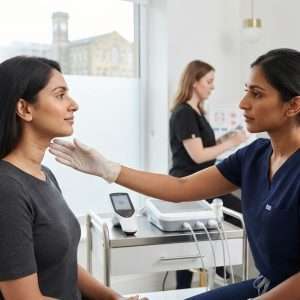
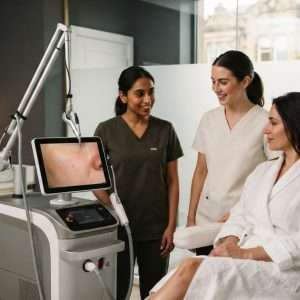
At Arden Clinic, non-surgical treatments are delivered within a clinical setting with a focus on precision and patient care. Each treatment is selected and adapted based on individual needs, ensuring a considered and tailored approach.
By offering a range of advanced technologies, the clinic can address skin laxity at multiple levels, supporting both immediate improvement and overall skin health.
Considering Treatment For Skin Laxity
Skin laxity is a gradual and multifactorial process, but it can be effectively managed without surgery. Modern treatments can support the skin at different depths, improving firmness while maintaining a natural appearance.
With a clear understanding of how these aesthetic facial treatments work, patients can make informed decisions about their skin. A thoughtful and personalised approach allows for improvements that develop over time, supporting both confidence and skin quality.
Related Articles
- Morpheus8 Vs Traditional Microneedling
- Introduction To Neurolyft Facial EMS Treatment
- HIFU Skin Tightening Works Beneath The Surface
- Micro Needling for Skin Rejuvenation and Scarring
- Radiofrequency For Skin Tightening and Collagen Stimulation
Prefer an AI Summary?