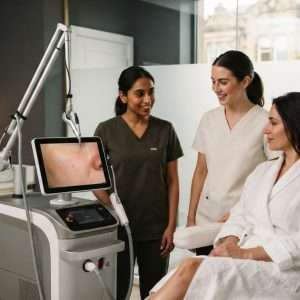
Whilst approximately one in five people in the UK regret their ink, the primary barrier to seeking treatment is often the perceived tattoo removal pain level. It’s entirely natural to feel anxious about the sensation of a laser or the potential for skin damage, especially if your initial tattooing experience was particularly intense. At Arden Clinic, we’ve administered hundreds of thousands of treatments since 2011, and we’ve seen first-hand how these fears can delay the transformation you’re looking for. We operate from professional medical centres to ensure that your safety and comfort remain our absolute priorities.
This article explores the reality of modern discomfort and how Picosecond laser tattoo removal ensures a more comfortable experience. You’ll learn how this state-of-the-art technology uses pressure waves rather than intense heat to protect the skin, what the sensation actually feels like, and how our assessment-led approach prepares you for your sessions. By understanding the science behind the technology, you can approach your journey with confidence and a realistic expectation of the process ahead.
Key Takeaways
- Understand the reality of the tattoo removal pain level, which many clients describe as a quick snapping sensation rather than the intense burning often feared.
- Discover how modern Picosecond technology uses ultra-fast pressure waves to shatter ink, significantly reducing the heat-related discomfort associated with older lasers.
- Learn how factors like tattoo placement and ink density influence sensitivity and why multiple sessions are always necessary for effective fading.
- Explore the professional pain management protocols used in our medical centres, including advanced skin cooling systems designed to enhance your comfort during treatment.
Understanding Tattoo Removal Pain Level: Myth vs Reality
The most frequent concern for those considering treatment at our professional medical centres involves the tattoo removal pain level. Common myths often suggest the process is unbearable, yet the reality is far more manageable for the majority of clients. Most describe the sensation as a quick, hot flick or the sharp snap of a rubber band against the skin. Whilst it’s certainly a unique feeling, it’s rarely as intense as people anticipate before their first session.
A significant factor in managing this discomfort is the speed of the treatment itself. Unlike the initial tattooing process, which can take hours of sustained contact, a laser session is remarkably fast. Depending on the size of the ink, the active laser time often lasts only a few minutes. Understanding the laser tattoo removal process helps to demystify these sensations, especially when utilising Picosecond laser tattoo removal, which is engineered for maximum efficiency and skin safety.
How Pain Compares to Getting a Tattoo
Many assume that removing a tattoo must be more painful than receiving one, but the sensations are fundamentally different. Getting a tattoo involves a needle dragging across the skin, creating a constant scratching or stinging feeling. In contrast, the laser delivers rapid, pulsing bursts of energy. Because the session is over so quickly, many of our clients find removal less taxing on their endurance than the original inking. It’s important to remember that whilst multiple sessions are always required for fading, each individual appointment is over in a fraction of the time it took to get the tattoo.
The “Rubber Band” Sensation Explained
The rubber band analogy is the industry standard for a reason. It accurately captures the sudden, snappy nature of the laser pulse as it interacts with the ink. During each pulse, the epidermis remains intact, protecting the deeper tissues whilst the energy shatters the pigment. This photomechanical action is highly precise, ensuring that the surrounding skin isn’t subjected to the prolonged heat that caused more intense discomfort in older, traditional laser technologies.
The Science of Comfort: How Picosecond Laser Technology Works
Picosecond technology represents a significant leap in aesthetic medicine. It’s currently regarded as the gold standard for those concerned about their tattoo removal pain level. Unlike traditional lasers that deliver energy in nanoseconds, Picosecond devices operate in trillionths of a second. This incredible speed is crucial because it fundamentally changes how the energy interacts with both the ink and your skin.
Photo-acoustic vs Thermal Energy
The photo-acoustic effect is a mechanical shattering of ink that spares the skin from excessive heat. Older Q-switched lasers rely primarily on thermal energy, which means they heat the ink particles until they expand and break. This residual heat can often spread to the surrounding tissue, leading to a lingering “burning” sensation during and after the treatment. Picosecond lasers, however, use rapid pressure waves to vibrate the ink until it shatters into tiny, dust-like particles. Because the pulse is so fast, the heat doesn’t have time to transfer to the healthy skin. This mechanical approach leads to a more comfortable experience and significantly reduced swelling. Public health authorities often describe what tattoo removal feels like, and these advancements ensure the reality is much milder than the myths suggest.
Skin Recovery and Post-Session Sensation
Once the session concludes, it’s common to experience a sensation similar to a mild sunburn. This feeling typically persists for only a few hours whilst the skin begins its natural healing process. Because the skin hasn’t been subjected to intense thermal stress, the recovery period is generally smoother and faster than with older technologies. This precision makes the technology versatile, as seen in Picosecond laser tattoo removal applications for delicate areas like lip pigmentation. If you’re curious about how your specific tattoo might react, you can speak with our team to organise a professional assessment.
Key Factors that Influence Your Pain Experience
The tattoo removal pain level experienced during a session is rarely static. It fluctuates based on several biological and technical variables. Whilst Picosecond laser tattoo removal minimises thermal damage, the sensation is still influenced by where the ink sits on the body and the specific nature of the pigment itself.
Sensitivity Map: Most vs Least Painful Areas
Anatomy plays a significant role in your comfort. Areas where the skin is thin and sits directly over bone, such as the ribs, ankles, spine, or collarbone, are typically more sensitive. This is because there is less subcutaneous fat to absorb the mechanical pressure wave produced by the laser. Conversely, fleshy areas with more muscle or fat, like the outer thighs or upper arms, generally report much lower discomfort levels during treatment.
The Influence of Ink Colour and Density
Ink characteristics also dictate the sensation. Darker pigments, particularly black and dark blue, absorb laser energy more efficiently. This high absorption rate can make the initial pulses feel more “snappy” compared to lighter colours. However, black ink is often the most straightforward to target. Multi-coloured tattoos require specific laser wavelengths to break down different pigments, which can slightly alter the sensation as the practitioner adjusts the device to address reds or greens.
Pigment depth and density are equally important. Older, more faded tattoos often have less ink for the laser to interact with, frequently requiring less energy and resulting in a milder experience. Once the laser shatters the ink, your immune system begins the work of processing and removing the particles through the lymphatic system. Maintaining a healthy lifestyle whilst undergoing treatment can help support this natural clearance, ensuring a smoother healing journey between your sessions.

Professional Pain Management at Arden Clinic
At Arden Clinic, we prioritise your comfort through a meticulous, assessment-led approach. Operating from professional medical centres in Bradford and Leeds, our environment reflects a commitment to clinical excellence and hygiene. Effectively managing the tattoo removal pain level relies on the expertise of our specialists. Our practitioners have administered hundreds of thousands of treatments since 2011, so they’re well-versed in adjusting laser settings with precision to suit your specific skin tone and tolerance.
To further enhance your experience, we utilise medical-grade skin cooling systems during every procedure. These systems deliver a constant stream of chilled air to the treatment area, which helps to numb the skin and counteract the snappy sensation of the laser pulses. This ensures the process remains professional, controlled, and as comfortable as possible.
What to Expect During Your Consultation
Your journey begins with a thorough assessment and a mandatory patch test. This small-scale application allows you to experience the sensation of Picosecond laser tattoo removal first-hand before committing to a full session. Based on your reaction and the specific characteristics of your ink, we develop an individualised treatment plan; whilst multiple sessions are always required, these are designed to achieve optimal results whilst respecting your comfort.
Aftercare and Minimising Discomfort at Home
Post-treatment care is vital for a smooth recovery. We recommend using cool compresses to soothe the area and strictly avoiding sun exposure to prevent irritation. For those seeking professional post-laser support, Arden Skincare offers a range of curated products formulated to assist the skin’s natural healing process. Following these protocols ensures that any residual redness or sensitivity dissipates as quickly as possible.
Take the First Step Toward Clearer Skin
Understanding the reality of the tattoo removal pain level is the first step toward reclaiming your skin. By moving away from older thermal lasers and utilising state-of-the-art Picosecond technology, the experience is transformed from one of intense heat to a manageable, rapid sensation. This photomechanical approach ensures that your skin is protected whilst ink is shattered with clinical precision, facilitating a smoother recovery process.
Arden Clinic has been an award-winning specialist since 2011, having administered hundreds of thousands of treatments with a focus on safety and individualised care. Operating within professional medical centres, we combine advanced technology with the expertise required to tailor every session to your unique needs. You don’t have to let the fear of discomfort hold you back from a transformation that feels right for you.
Our team is ready to provide the professional guidance and clinical excellence you deserve as you begin your journey.
Frequently Asked Questions
Is tattoo removal pain worse than getting the tattoo?
Most clients find the tattoo removal pain level manageable because the session is significantly shorter than the original inking. Whilst getting a tattoo involves a constant scratching sensation, the Picosecond laser uses rapid pressure pulses. Many describe it as a sharp, quick snap. Because the active laser time often lasts only a few minutes, the endurance required is much lower than when the tattoo was first applied.
Can I use numbing cream before my Picosecond laser session?
You may apply a topical numbing cream before your appointment at our Bradford or Leeds clinics. However, we also utilise advanced medical-grade skin cooling systems during the procedure. These systems provide a continuous stream of chilled air to the area, which helps to desensitise the skin and enhance your comfort. We recommend discussing specific cream brands during your initial assessment-led consultation to ensure they don’t interfere with the laser’s efficacy.
How long does the pain last after a tattoo removal session?
Any residual discomfort typically subsides within a few hours of the session. You might experience a sensation similar to a mild sunburn, accompanied by slight redness or swelling in the treated area. These effects are temporary and usually resolve quickly. Following our professional aftercare advice, such as applying cool compresses and avoiding direct sun exposure, can help to soothe the skin and minimise any lingering sensitivity whilst it heals.
Which body parts are the most painful for tattoo removal?
Sensitivity varies based on anatomy, with areas where skin is thin and close to the bone often being more sensitive. This includes locations like the ribs, spine, ankles, and collarbone. Fleshier areas such as the outer thigh or upper arm generally report a lower tattoo removal pain level. During your consultation in Yorkshire, our specialists will assess your tattoo’s placement and explain what to expect based on your specific location.
Does the laser cause permanent scarring or skin damage?
Picosecond laser technology is designed to minimise the risk of scarring by using mechanical pressure waves rather than intense heat. This precision helps to protect the surrounding tissue whilst targeting the ink. Whilst individual results vary, the risk of skin damage is significantly reduced when treatment is administered by trained specialists in a professional medical centre environment. Multiple sessions are always required, and we tailor every programme to ensure the highest safety standards.