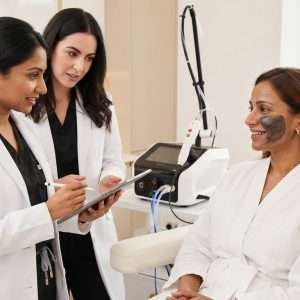
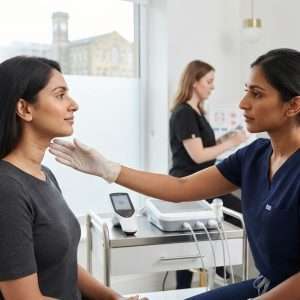
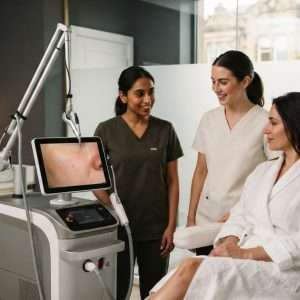
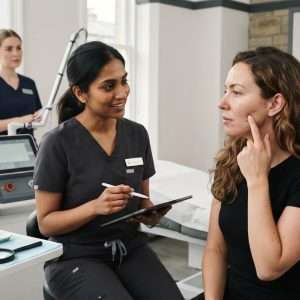
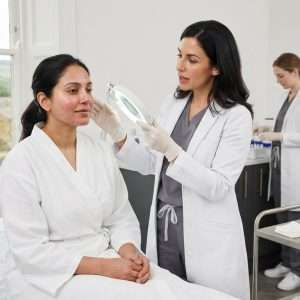
Changes in skin quality develop gradually as intrinsic ageing, environmental exposure, and lifestyle factors begin to influence the skin’s structure. A decline in hydration, collagen and elastin can lead to reduced firmness, uneven texture and a loss of luminosity. These changes often present subtly at first, before becoming more noticeable over time.
Skin remodelling treatments are designed to address these underlying changes by supporting the skin from within. Rather than focusing solely on surface appearance or structural augmentation, these treatments aim to improve the condition and behaviour of the skin itself. The result is a more refined, balanced appearance that remains consistent with natural features.
Skin Structure and Visible Changes
The skin is supported by a complex network within the dermis, where collagen provides strength and elastin contributes to flexibility and resilience. Hyaluronic acid plays an essential role in maintaining hydration, helping the skin retain moisture and maintain volume at a cellular level.
Over time, the production and organisation of these components change. Collagen fibres become less structured, elastin loses its elasticity and natural hydration levels decline. In addition to intrinsic ageing, external factors contribute to this process. Ultraviolet exposure can accelerate collagen breakdown, while glycation affects the quality and function of collagen fibres. Hormonal changes may affect skin thickness and hydration, and a reduction in cellular turnover can slow skin renewal.
These combined changes can lead to:
- Reduced skin firmness
- Early laxity in areas such as the lower face and neck
- Fine lines and crepiness
- Dull or uneven skin tone
- A loss of overall skin quality
Understanding these structural changes allows for a more considered approach to treatment, focusing on restoration rather than temporary correction.
Principles Of Skin Remodelling
Skin remodelling treatments are designed to stimulate the skin’s natural regenerative processes. Rather than replacing lost volume or masking surface concerns, these treatments encourage the skin to improve its own structure and function.
At a cellular level, many treatments work by stimulating fibroblasts, the cells responsible for producing collagen and elastin. Controlled stimulation within the dermis activates repair pathways, prompting the skin to regenerate and strengthen over time. This distinction between stimulation and replacement is central to skin remodelling, as results arise from biological responses rather than immediate correction.
These treatments typically aim to:
- Increase hydration within the deeper layers of the skin
- Stimulate collagen and elastin production
- Improve skin density and resilience
- Support gradual tightening through improved structure
- Refine texture and overall tone
The outcome is progressive improvement that develops naturally and remains consistent with the individual.
Treatment Categories In Skin Remodelling
A range of treatments can support skin remodelling, each working at different depths within the skin and addressing specific concerns. Selection is based on individual skin condition, the degree of structural change and overall treatment objectives.
Injectable Skin Remodelling Treatments
Injectable treatments are designed to act within the dermis, delivering active substances directly to the area where hydration and collagen production occur. These treatments are particularly suited to concerns relating to skin quality, such as dehydration, early laxity and loss of elasticity.
Treatments such as Profhilo are formulated with stabilised hyaluronic acid that disperses within the skin. This supports hydration while encouraging collagen and elastin production, leading to improved firmness and texture without adding volume.
Energy Based Treatments
Energy-based treatments act at deeper levels within the skin, using technologies such as ultrasound or radiofrequency to create controlled thermal stimulation. This process encourages collagen production and gradual tightening of the tissue.
These treatments are often selected for areas where laxity is more established and structural support is required beneath the surface. They can form an important part of a broader treatment plan when combined with other approaches.
Regenerative Skin Treatments
Regenerative treatments focus on stimulating the skin’s natural repair mechanisms, often at a more superficial level compared to energy-based approaches. Techniques such as microneedling create controlled microchannels in the skin, triggering a healing response that stimulates collagen production and improves skin texture.
These treatments are particularly effective at refining surface irregularities, including uneven texture and early visible signs of ageing, while also enhancing overall skin quality.
Profhilo Within Skin Remodelling Treatments
Profhilo represents a distinct category within injectable treatments, designed specifically to improve skin quality rather than create volume or structural change.
Formulated with a high concentration of stabilised hyaluronic acid, Profhilo is administered at a series of carefully selected bio-aesthetic points. These points are chosen to support optimal diffusion, allowing the product to spread evenly within the tissue rather than remaining localised.
Once injected, the product integrates within the skin and disperses over several days. This process supports hydration while stimulating fibroblast activity, encouraging the production of collagen and elastin. Unlike traditional skin boosters, Profhilo is not designed to sit superficially or target isolated areas, but instead to create a more global improvement in skin condition.
Over time, this results in improved firmness, smoother texture and enhanced luminosity, while maintaining natural facial characteristics.
Treatment Planning and Combination Approaches
Effective skin remodelling is rarely achieved with a single treatment. A structured approach allows different aspects of skin ageing to be addressed in a complementary and progressive manner.
Treatment planning often involves layering interventions over time rather than delivering multiple modalities in a single session. This allows the skin to respond appropriately at each stage and reduces the risk of over-treatment.
Injectable treatments may be used to improve hydration and dermal function, while energy-based treatments provide deeper structural support. Regenerative treatments can then refine surface texture and enhance overall skin clarity. The sequence in which these treatments are delivered is carefully considered, as correct timing supports optimal outcomes.
Plans are adjusted based on how the skin responds, ensuring that treatment remains appropriate and aligned with individual goals. This approach reflects a more considered view of skin health.
Results and Treatment Expectations
Skin remodelling treatments are designed to deliver gradual and progressive improvement rather than immediate transformation. Early changes are often associated with increased hydration and a smoother skin surface, which may become noticeable within the first few weeks.
As collagen and elastin production increase, further improvements in firmness and skin quality develop over time. The rate and extent of these changes can vary depending on baseline skin condition, age and lifestyle factors.
The aim is to achieve subtle refinement that enhances overall appearance without creating an artificial or altered look. Maintenance treatments are typically recommended to support ongoing results, as the natural ageing process continues.
Arden Clinic and Skin Remodelling
At Arden Clinic, skin remodelling treatments are delivered with a focus on structure, balance and skin health. Each patient undergoes a detailed assessment that considers both visible concerns and the underlying condition of the skin.
Facial treatments are guided by a clinical understanding of dermal behaviour, enabling a tailored approach that may involve a combination of techniques delivered over time. Emphasis is placed on restraint and precision, ensuring results remain refined and consistent with natural features.
The clinic approach prioritises gradual improvement and continuity, supporting patients in maintaining skin quality through carefully considered treatment plans rather than isolated interventions. This ensures outcomes that are balanced, appropriate and sustainable over time.
Related Articles
- Near Infrared Skin Tightening Introduction
- Treating Skin Laxity Without Surgery
- Introduction To Neurolyft Facial EMS Treatment
- HIFU Skin Tightening Works Beneath The Surface
- HydraFacial Elite For Dehydrated and Dull Skin
Prefer an AI Summary?