Polynucleotides aren’t mere skin boosters; they’re bio-regenerative instruction manuals that teach your skin cells how to repair stubborn acne scarring from within. If you’ve struggled with the frustration of uneven texture or deep pitting, you’ve likely found that surface-level treatments often fall short of expectations. It’s understandable to feel confused by the vast array of options when searching for polynucleotides for acne scars Leeds, especially when you’re looking for visible, clinical results that actually last.
At Arden Clinic, a multi-award-winning specialist established in 2011, we’ve performed hundreds of thousands of treatments in our professional medical centre setting. We understand that your skin’s health is individual and requires a meticulous, evidence-led approach. This clinical guide will show you how these advanced bio-stimulators work at a cellular level to repair damaged tissue and improve skin quality from the inside out. We’ll explore how this innovative technology can help reduce scar depth and refine texture, providing you with a clear path to achieving a smoother and more confident complexion.
Key Takeaways
- Discover how polynucleotides function as bio-regenerative “instruction manuals” to repair skin tissue at a cellular level, moving beyond temporary surface hydration.
- Learn why choosing polynucleotides for acne scars Leeds at an established clinic can help improve the appearance of atrophic scarring and uneven skin texture.
- Compare the benefits of bio-stimulators against traditional modalities like Morpheus8 and CO2 laser resurfacing to determine the most suitable approach for your concerns.
- Understand the clinical journey, from the initial assessment-led consultation to the injection process, all conducted within a professional medical centre environment.
- Explore how stimulating natural collagen and elastin production may lead to long-term improvements in skin health and a visible reduction in scar depth.
Understanding Polynucleotides for Acne Scarring
Polynucleotides represent a significant advancement in regenerative aesthetics, moving far beyond the capabilities of traditional surface-level treatments. These highly purified DNA fragments, often referred to as PDRN, function as biological catalysts that signal the skin to initiate its own repair mechanisms. By Understanding Polynucleotides as biopolymers, we can see how they provide the essential building blocks for cellular regeneration. This technology marks a clear shift in clinical practice from providing temporary hydration toward achieving genuine structural skin repair. For many individuals seeking polynucleotides for acne scars Leeds, this treatment has become the preferred option for addressing deep-seated textural irregularities.
At Arden Clinic, we’ve remained at the forefront of skin innovation since our establishment in 2011. As a multi-award-winning clinic, we’ve administered hundreds of thousands of treatments, allowing us to refine our approach to complex skin concerns. Polynucleotides are now considered a “gold standard” for textural issues because they offer a sophisticated solution for pitting and unevenness. A key advantage of this technology is its suitability for various skin tones; unlike some aggressive laser therapies, it carries a lower risk of post-inflammatory hyperpigmentation, making it an inclusive choice for our diverse patient base.
The Difference Between Polynucleotides and Traditional Skin Boosters
It is easy to confuse different injectable treatments, but the mechanism behind polynucleotides is unique. Traditional skin boosters, such as those containing hyaluronic acid, primarily focus on increasing moisture levels within the dermis to create a temporary “glow”. Whilst these are excellent for hydration, they don’t fundamentally change how cells behave or repair the underlying damage found in scar tissue. Polynucleotides are different because they “recode” cell behaviour by stimulating fibroblasts to produce high-quality Type I collagen and elastin. This isn’t a dermal filler that adds volume to fill a gap; it’s a polynucleotide skin booster treatment designed to rebuild the skin’s internal architecture from the inside out.
Why Acne Scars are Difficult to Treat Without Bio-Stimulation
Acne scars are inherently complex because they consist of fibrotic, tethered tissue where the natural healing process has stalled or become distorted. This “broken” repair message means the skin cannot heal itself correctly without a new set of biological instructions. Surface treatments often fall short because they cannot reach the depth required to break down this stubborn fibrosis. Polynucleotides may help bridge this repair gap by providing the necessary signals to restart healthy tissue synthesis. By introducing these bio-stimulators, we can improve the appearance of polynucleotides for acne scars Leeds patients by encouraging the body to replace rigid scar tissue with more flexible, healthy skin cells.
The Science of Cellular Repair: How Polynucleotides Improve Scar Tissue
Polynucleotides function as biological “instruction manuals” that re-engage the skin’s natural healing processes. Unlike treatments that simply mask imperfections, these bio-stimulators work by directly engaging with fibroblasts. These are the primary cells responsible for the production of Type I collagen and elastin, the structural proteins that give skin its resilience and smoothness. By stimulating these cells, polynucleotides help to rebuild the dermal scaffold that has been compromised by previous acne inflammation. This cellular recoding is particularly effective for patients seeking polynucleotides for acne scars Leeds, as it addresses the root cause of textural irregularities rather than providing a superficial fix.
Beyond collagen production, these molecules exhibit a potent “scavenger” effect on free radicals. This is a critical biological function because free radicals contribute to oxidative stress, which can lead to further tissue degradation and stall the healing of existing scars. By neutralising these harmful molecules, polynucleotides create a stable environment where healthy tissue can thrive. Additionally, the treatment is designed to improve microcirculation to the scarred area. Enhanced blood flow ensures that oxygen and essential nutrients are delivered directly to the damaged dermis, whilst simultaneously helping to reduce the persistent inflammation associated with post-acne redness.
Promoting Fibroblast Growth and Tissue Regeneration
The primary goal of bio-stimulation is to create an “ideal environment” for tissue repair. Polynucleotides facilitate this through a process known as extracellular matrix (ECM) remodelling. The ECM is the complex network of molecules that provides structural support to your skin cells. When acne causes deep scarring, this matrix becomes distorted and fibrotic. Polynucleotides help to reorganise this matrix, encouraging the growth of healthy, organised fibres. Because this process relies on your body’s own biological repair mechanisms, the results are designed to be long-lasting and improve progressively over several months. To understand how these cellular mechanisms can be tailored to your skin, you may wish to speak with one of our specialists.
Addressing Different Scar Types: Atrophic vs. Hypertrophic
Acne scarring is rarely uniform, often presenting as a combination of different scar types. Atrophic scars, such as rolling, boxcar, or ice pick scars, are characterised by a loss of tissue that results in visible pitting. Bio-stimulation is particularly effective for these concerns as it may help to “lift” the depression by encouraging new tissue synthesis. At Arden Clinic, we prioritise an assessment-led approach to identify the specific depth and nature of your scarring. For complex cases, we may suggest using polynucleotides alongside other advanced modalities like Morpheus8 to achieve a comprehensive improvement in skin texture and health.
Polynucleotides vs. Traditional Acne Scar Treatments
Patients often arrive at our clinic asking whether they should prioritise mechanical resurfacing or injectable regeneration. Whilst Morpheus8 is a market leader for remodelling the skin’s structure through radiofrequency microneedling, it works by creating controlled thermal injury to stimulate change. In contrast, polynucleotides for acne scars Leeds offer a biochemical solution that signals the skin to repair without using heat. CO2 laser resurfacing remains a powerful tool for severe texture issues, but it often requires significant downtime, sometimes exceeding a week of recovery. Polynucleotides provide a sophisticated alternative for those who cannot accommodate a lengthy absence from daily life, as the initial injection marks typically subside within 24 to 48 hours.
Choosing the right modality depends on your scar type, skin tone, and lifestyle. At Arden Clinic, our assessment-led approach ensures that we match the technology to your specific biological needs. We don’t believe in a one-size-fits-all approach; instead, we utilise our history as a multi-award-winning clinic to curate the most effective path for your skin.
When to Choose Polynucleotides Over Microneedling
Certain patient profiles benefit more from a non-thermal, injectable repair. If you have particularly sensitive skin or are prone to post-inflammatory hyperpigmentation, polynucleotides may be a safer starting point than heat-based devices. They don’t carry the same risk of thermal damage, making them an excellent choice for a wider range of skin tones. Additionally, we often use these bio-stimulators to prime the skin. By improving the underlying health and hydration of the dermis first, we find that subsequent resurfacing treatments can be more effective and better tolerated by the patient.
The Synergy of Multi-Technology Protocols
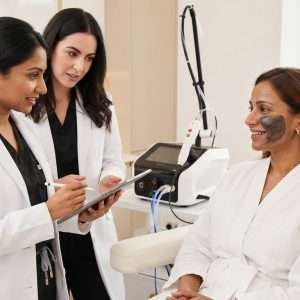
In a professional clinical setting, we rarely view these treatments in isolation. The most impressive results often come from combining Morpheus8 with polynucleotides. This multi-layered protocol uses the mechanical stimulus of microneedling to break down fibrotic tissue, whilst the polynucleotide skin boosters provide the raw materials for rapid, high-quality repair. These bio-stimulators support the healing phase of laser and RF treatments, potentially reducing redness and speeding up the recovery of the skin barrier. At Arden Clinic, established in 2011, we’ve utilised our extensive experience across hundreds of thousands of treatments to develop these synergistic protocols. Every plan is individualised following a thorough skin assessment at our professional medical centre environment, ensuring that your journey toward smoother skin is both safe and effective.
Your Patient Journey in Leeds and Bradford
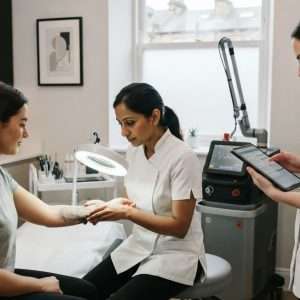
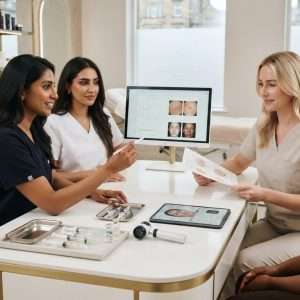
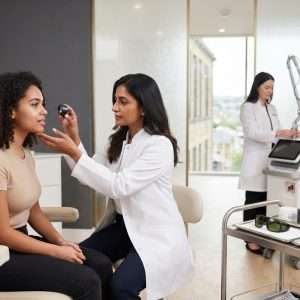
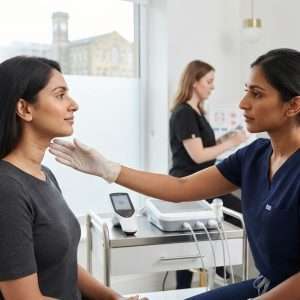
Embarking on a treatment programme for polynucleotides for acne scars Leeds begins with a meticulous assessment-led consultation. At Arden Clinic, we don’t believe in generic application; instead, we map your specific scar patterns and evaluate your overall skin health to ensure bio-stimulation is the correct path for you. Our practitioners, trained by world-leading doctors, use this initial stage to identify whether your scarring is primarily rolling, boxcar, or ice pick, as this determines the precise injection technique required within our professional medical centre environment.
The treatment session itself focuses on precision and patient comfort. We typically apply a topical numbing agent to the target area to minimise discomfort during the injection process. You’ll feel a series of small pinpricks as the polynucleotides are administered into the dermis. Immediately following the session, it’s common to see small, visible bumps known as papules at the injection sites. These are simply deposits of the product that the skin will absorb over the following 24 to 48 hours. Most patients require a course of 3 to 4 sessions, spaced approximately 2 to 4 weeks apart, to facilitate optimal tissue remodelling and long-term skin health monitoring.
What to Expect During and After Your Session
A typical session lasts approximately 30 to 45 minutes, making it a convenient option for those with busy schedules. Whilst results vary between individuals, most patients report a visible improvement in skin texture and hydration after their second session. You should plan for a small amount of social downtime; mild swelling or redness is normal but usually subsides quickly. We provide discreet guidance on managing this phase to ensure you feel confident throughout your recovery.
Preparing for Your Clinical Treatment
To achieve the best possible outcome, we recommend specific preparation steps. You should avoid blood-thinning supplements, such as Vitamin E or fish oils, for at least a week before your appointment to reduce the risk of minor bruising. Supporting your skin’s resilience with professional skincare, such as Obagi Medical, can also enhance the healing process. We encourage you to bring a comprehensive list of any previous acne treatments or medications to your assessment, as this history allows us to tailor your individualised treatment plan with greater accuracy.

Why Choose Arden Clinic for Your Acne Scar Journey?
Arden Clinic isn’t just another aesthetics provider; it’s an established market leader that’s been shaping the industry since 2011. Choosing polynucleotides for acne scars Leeds at our clinic means placing your trust in a multi-award-winning specialist with a proven track record. We’ve administered hundreds of thousands of treatments, a figure that reflects our deep-seated expertise and the consistent results we deliver for our patients. Our clinical reputation is built on a foundation of transparency, integrity, and a commitment to using only authentic, branded technologies that have been rigorously vetted for safety and efficacy.
Operating from within a professional medical centre environment, we maintain the highest standards of hygiene and clinical protocol. This setting provides our patients with the reassurance that they’re in a safe, regulated space designed for medical-grade aesthetic procedures. We don’t just offer treatments; we provide a sophisticated clinical experience where your safety and long-term skin health are the absolute priorities. Our commitment to excellence ensures that every patient feels supported by meticulous experts throughout their transformation.
Expertise in Advanced Skin and Laser Technology
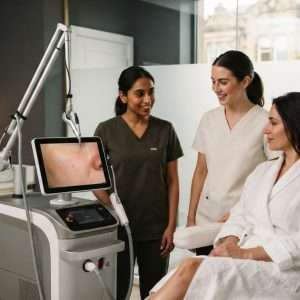
Our practitioners have undertaken advanced training with world-leading doctors and industry professionals, including those who treat high-profile global clientele. This elite level of education allows us to design complex, multi-layered protocols that other clinics may not be equipped to provide. For instance, we can strategically combine polynucleotides with HIFU or CO2 laser resurfacing to address particularly stubborn or deep-seated scarring. This “Signature Treatments” approach ensures that every procedure is tailored to the individual’s biological response, whilst always adhering to the strictest professional standards.
Convenient Clinical Care Across West Yorkshire
We’re proud of our local roots and serve a wide patient base from our primary locations in Bradford and Leeds, also providing accessible care for residents in Halifax and Dewsbury. Every journey at Arden Clinic is fundamentally assessment-led; we won’t recommend a treatment unless we’re confident it’s the right fit for your specific scar type and skin health. This meticulous approach is what differentiates us as a market leader in the region. We invite you to begin your skin transformation with a team that values professional excellence and individualised care. Your path to smoother, healthier skin starts with an expert consultation at a clinic that truly understands the science of regeneration.
Your Path to Resilient, Refined Skin
Polynucleotides represent a transformative shift in treating atrophic scarring, moving beyond surface-level camouflage to genuine cellular repair. By stimulating your own fibroblasts to produce high-quality collagen, this technology addresses the structural damage left by acne at a fundamental level. Choosing polynucleotides for acne scars Leeds at Arden Clinic ensures your treatment is administered within a professional medical centre by practitioners trained by world-leading aesthetic doctors. Our multi-award-winning clinic has been a specialist leader since 2011, prioritising patient safety and clinical excellence across every procedure we perform.
Your journey toward a more refined complexion is supported by our extensive experience and commitment to the latest bio-regenerative innovations. We focus on a meticulous, assessment-led approach that treats your skin as the unique organ it is. It’s time to move past the frustration of uneven texture and embrace a scientifically backed path to healthier, smoother skin. We look forward to helping you achieve the confidence you deserve through tailored, professional care.
Frequently Asked Questions
How many polynucleotide sessions will I need for my acne scars?
A standard protocol typically involves a course of 3 to 4 sessions to achieve optimal tissue remodelling. These sessions are usually spaced 2 to 4 weeks apart to allow the skin’s natural repair cycle to progress effectively. Whilst initial improvements in hydration may be seen sooner, the full regenerative results for acne scars often develop over 6 to 12 weeks after the course is completed. Your individual requirements are determined during an assessment-led consultation.
Is there any downtime after polynucleotide injections for scarring?
Most patients experience very little downtime, with any initial injection marks or small bumps typically subsiding within 24 to 48 hours. These temporary papules occur because the product is placed into the dermis for absorption. You might notice mild swelling or redness in the treated area, but this usually resolves quickly. It’s a popular choice for those seeking polynucleotides for acne scars Leeds because it doesn’t require the lengthy recovery associated with aggressive lasers.
Can polynucleotides be used on all skin types and colours?
Yes, polynucleotides are suitable for all skin types and colours because they work through biochemical signalling rather than thermal injury. Unlike some laser treatments, they carry a significantly lower risk of post-inflammatory hyperpigmentation, making them a safe option for darker skin tones. This inclusivity is a primary benefit of the technology. Our practitioners evaluate your skin’s health during your assessment to ensure the treatment is tailored to your specific needs and concerns.
Are the results of polynucleotide scar treatment permanent?
The improvements in scar tissue are designed to be long-lasting because they’re based on actual biological repair rather than temporary volume. However, your skin will continue to age naturally over time. To sustain the enhanced skin quality and texture, we typically recommend maintenance sessions every 6 to 12 months. Results vary between individuals, and ongoing skin health monitoring helps ensure your complexion remains as smooth and healthy as possible following your initial course of treatment.
How do polynucleotides feel compared to dermal fillers?
Polynucleotides feel quite different from dermal fillers because they don’t add physical volume or “fill” a space. Whilst the injection process is similar, the product is a thin liquid that the skin absorbs to stimulate repair from within. You won’t feel a physical implant or lump in the skin once the initial papules have dissipated. The focus is on improving the skin’s internal architecture and texture rather than changing facial contours or adding fullness.
Can I have polynucleotides if I still have active acne?
It’s usually recommended to have active acne under control before focusing on scar repair, though some practitioners use them alongside other treatments to manage inflammation. Active breakouts can interfere with the healing process and may increase the risk of infection during injections. During your consultation at our professional medical centre, we’ll assess your current skin condition. We may suggest a bespoke plan that addresses active congestion before beginning your journey with polynucleotides for acne scars Leeds.
What is the difference between PDRN and polynucleotides?
Polydeoxyribonucleotide (PDRN) is actually a specific subtype of polynucleotides. Whilst both are derived from DNA fragments and act as bio-stimulators, polynucleotide products generally contain longer molecular chains and a higher concentration of active ingredients. This complexity often makes them more effective for intensive tissue remodelling and structural repair. Both molecules function by signalling fibroblasts to increase collagen production, but your practitioner will select the specific formulation that best suits your scar depth and skin type.
How much do polynucleotides for acne scars cost in Leeds?
The cost of treatment varies depending on the number of sessions required and the total area being treated. Since every patient’s scarring is individual, we determine the final investment during an assessment-led consultation. We don’t provide fixed prices without seeing your skin, as a bespoke plan is essential for clinical results. You can contact our team directly to discuss general price ranges and book an appointment at our professional medical centre environment.