In 2026, UK searches for “polynucleotides” surged by 133% in a single month, reaching 55,000 as patients increasingly reject the “over-filled” aesthetic of previous years. This shift marks a move towards regenerative medicine, where the polynucleotide skin booster has become the preferred choice for those seeking cellular repair rather than just temporary volume. You’ve likely felt the frustration of persistent dark circles or “crepiness” that no amount of concealer can hide. It’s a common concern, especially when you want to look naturally refreshed without appearing “done”.
This article reveals how the latest breakthrough in DNA-based skin repair is transforming anti-ageing treatments in West Yorkshire. By opting for these advanced biostimulators, you’re choosing a sophisticated treatment that communicates with your cells to stimulate collagen and elastin production. We’ll explore the clinical science behind this technology, its specific benefits for thickening delicate skin around the eyes, and how it delivers a long-term solution for healthier, more resilient skin.
Key Takeaways
- Understand how DNA-derived biostimulators trigger fibroblast activity to naturally increase collagen and elastin levels for genuine structural repair.
- Learn why a polynucleotide skin booster offers deep tissue regeneration and skin thickening, whereas traditional hyaluronic acid treatments focus primarily on surface hydration.
- Discover the specific benefits of regenerative aesthetics for treating delicate areas, such as reducing “crepiness” and persistent dark circles under the eyes.
- Gain insight into the clinical journey at our West Yorkshire centres, including the importance of medical-grade consultations and precise injection techniques.
- Explore how combining these boosters with advanced technologies like Morpheus8 can amplify your results for a more comprehensive and natural facial rejuvenation.
What is a Polynucleotide Skin Booster?
The aesthetic industry is currently undergoing a fundamental shift from concealment to correction. A polynucleotide skin booster is not a traditional dermal filler designed to physically occupy space. Instead, it is a biological tool composed of filtered, ultra-pure DNA fractions derived from natural sources. To understand the foundation of this technology, one might ask what are polynucleotides in a clinical context? They are essentially biostimulators that communicate directly with your cells to initiate a repair sequence. This technology represents the pinnacle of regenerative medicine in 2026, moving beyond the “frozen” or “over-filled” looks that dominated previous decades.
Residents in urban centres like Leeds and Bradford face unique environmental challenges. Persistent exposure to urban pollution and oxidative stress can lead to premature skin thinning and a loss of structural integrity. Whilst traditional skin boosters provide essential hydration through hyaluronic acid, they don’t always address the underlying damage. Polynucleotides go deeper. They focus on structural repair and cellular longevity, making them an essential intervention for those living in busy West Yorkshire environments where skin is often under constant environmental siege.
The Evolution of Injectable Skincare
The journey of injectable treatments has moved from simple mesotherapy to sophisticated DNA-based regeneration. Early treatments focused on superficial nourishment, whilst the next generation prioritised volume through fillers. Today, the UK market demands bio-harmonious solutions that work in synergy with the body’s natural processes. Arden Clinic has established itself as a leader in this field, carefully curating advanced technologies that prioritise long-term skin health over temporary aesthetic masks. We provide a bridge between traditional aesthetics and the future of regenerative science.
Key Indications for Treatment
Polynucleotides are exceptionally versatile. They are particularly effective for addressing skin laxity, atrophic scarring, and the fine lines that traditional treatments struggle to resolve. Because they work at a cellular level, they don’t just hide flaws; they improve the skin’s functional capacity to heal itself.
- Periorbital Rejuvenation: The delicate eye area is often too thin for standard fillers. Polynucleotides safely thicken this tissue to reduce dark circles.
- Inflammatory Support: By repairing skin at a cellular level, these boosters help manage conditions like rosacea and hyperpigmentation by calming the skin’s inflammatory response.
- Textural Improvement: They are ideal for “crepiness” caused by environmental damage, providing a smoother, firmer surface.
This treatment isn’t about altering your features. It’s about restoring the quality of your skin so it behaves like younger, healthier tissue. At Arden Clinic, we see this as the essential foundation for any modern anti-ageing strategy.
The Science of Regeneration: How DNA Fragments Repair Your Skin
The efficacy of a polynucleotide skin booster lies in its ability to communicate with the skin at a genomic level. Unlike traditional treatments that provide a passive layer of hydration, polynucleotides act as active biological signals. They initiate what clinicians call a “trophic effect,” which is essentially a deep-seated nourishment that improves tissue quality from the inside out. This isn’t a superficial change. It’s a fundamental reprogramming of how your skin cells behave, recover, and defend themselves against the passage of time.
There is robust scientific evidence for polynucleotide skin treatments showing they don’t just fill gaps; they repair them. By providing the essential building blocks of DNA, these treatments allow the skin to focus its energy on regeneration rather than just survival. This leads to a measurable increase in the skin’s functional capacity.
Fibroblast Activation and Collagen Synthesis
Polynucleotides bind to specific A2A receptors on the surface of fibroblast cells, triggering a biological cascade that stimulates the production of high-quality collagen. These fibroblasts are the workhorse cells of your dermis, responsible for maintaining structural integrity. Whilst many aggressive treatments induce “scar collagen” through controlled injury, polynucleotides encourage the synthesis of healthy Collagen Type I and Elastin. This results in skin that is supple and elastic rather than stiff or artificially plumped. This cellular reprogramming leads to a thicker, more resilient dermis that can better withstand the natural ageing process.
Anti-Inflammatory and Antioxidant Properties
Living in urban environments like Leeds or Bradford exposes the skin to significant oxidative stress. Fine particulate matter and pollution generate free radicals that break down skin health daily. Polynucleotides act as powerful free radical scavengers, neutralising these unstable molecules before they can cause cellular damage. This protective layer is vital for patients with compromised skin barriers or those prone to redness.
- Structural Fortification: Increasing the density of the dermis to combat thinning and “crepiness”.
- Elasticity Restoration: Boosting elastin levels to improve skin “snap-back” and firmness.
- Cellular Hydration: Enhancing the skin’s ability to retain its own moisture naturally.
The treatment also possesses remarkable anti-inflammatory properties. It calms sensitive skin types by modulating the immune response within the tissue. This makes it an ideal choice if you suffer from persistent redness or reactive skin. By reducing underlying inflammation, the skin appears clearer and more even in tone. If you’re looking to address these concerns, you can explore our regenerative options to see how this science applies to your specific skin needs. This dual action of repair and protection ensures that the results are not only visible but sustainable.
Polynucleotides vs. Traditional Skin Boosters: Which is Best?
Understanding the distinction between various injectable treatments is essential for achieving your desired aesthetic outcome. Whilst traditional hyaluronic acid (HA) skin boosters, such as Profhilo, have long been the gold standard for intense hydration, the polynucleotide skin booster operates on an entirely different biological premise. Traditional boosters act as a high-performance internal moisturiser. They attract water to the skin’s surface to create an immediate, dew-like “glow”. Polynucleotides, however, are not primarily hydrators. They are regenerative catalysts that focus on structural repair and tissue thickening.
The choice between these treatments often depends on whether your skin requires a temporary moisture surge or a long-term structural overhaul. Within current practices in aesthetic medicine, practitioners are increasingly moving away from a one-size-fits-all approach. We now recognise that whilst HA is excellent for surface texture, it cannot match the cellular “reprogramming” capabilities of DNA fragments. For patients in West Yorkshire seeking sustainable improvements, the focus has shifted towards these more permanent biological changes.
Profhilo vs. Polynucleotides: The Great Debate
The “Great Debate” in modern aesthetics isn’t about which treatment is superior, but which is most appropriate for your skin’s current physiological state. Younger patients with good skin density often prefer the rapid radiance provided by HA-based boosters. However, for more mature skin or those dealing with significant environmental damage, the “repair” factor of polynucleotides is more beneficial. Polynucleotide results typically build over a course of two to three sessions and can last between six and twelve months, offering a level of longevity that simple hydration treatments often lack.
Choosing Based on Your Skin Concerns
Arden Clinic specialists often utilise a bespoke combination approach to address multiple layers of skin ageing. By layering different technologies, we can provide both immediate satisfaction and long-term health. Consider the following guide for your concerns:
- Best for Hydration and Radiance: Standard HA skin boosters are ideal for dull, dehydrated skin that needs an instant lift.
- Best for Dark Circles and Thinning Skin: Polynucleotides are the premier choice for the delicate periorbital area where skin needs to be physically thickened.
- Best for Comprehensive Lifting: We frequently combine a polynucleotide skin booster with Morpheus8 to address both deep structural laxity and surface refinement.
Ultimately, the “best” treatment is the one that aligns with your specific clinical needs. By focusing on regeneration rather than just temporary plumping, you ensure that your skin doesn’t just look healthier, but actually functions as a more youthful, resilient organ.
The Treatment Journey: What to Expect at Arden Clinic
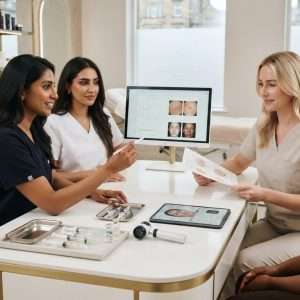
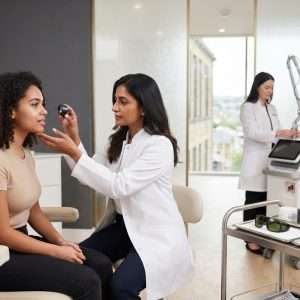
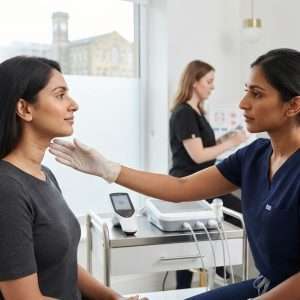
Every successful aesthetic outcome begins with a comprehensive clinical consultation at our Bradford or Leeds centres. We don’t believe in a standardised approach. Instead, our practitioners assess your skin’s structural integrity to determine how a polynucleotide skin booster can best meet your regenerative goals. This initial assessment ensures that the treatment is medically appropriate for you, especially if you have specific concerns like periorbital thinning or environmental damage from city living.
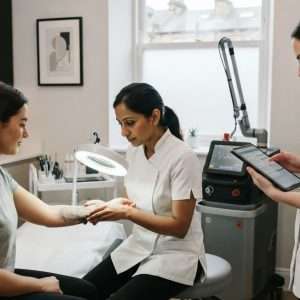
The procedure itself is designed for comfort and precision. We first apply a high-strength topical numbing cream to the treatment area. Once the skin is sufficiently anaesthetised, the polynucleotides are administered using specialised injection techniques, such as micro-droplet mesotherapy or a blunt-tipped cannula. This allows for even distribution of the DNA fragments within the dermal layer. Whilst you may experience minor “social downtime” in the form of small papules or slight swelling, these typically resolve within 24 to 48 hours. Most patients find they can return to their daily routine almost immediately.
A clinical protocol usually involves a course of three to four treatments, spaced approximately two to four weeks apart. This frequency is essential because it allows the fibroblast cells to remain in a constant state of stimulation. Skipping sessions or extending the gap between treatments can diminish the cumulative effect of the DNA repair process. If you are ready to begin your journey, you can book a clinical consultation with our award-winning team to discuss your bespoke plan.
Targeting the Under-Eye Area
Polynucleotides are now considered the gold standard for non-surgical tear trough rejuvenation. Traditional dermal fillers in this area carry a risk of puffiness or the Tyndall effect, where the filler appears blue under thin skin. Because PN focuses on thickening the skin itself, it reduces the appearance of hollowness and dark circles by improving the tissue’s own density. It’s a safer, more natural alternative for those who fear the “over-filled” look in the delicate periorbital zone.
Timeline of Results
Patience is key when dealing with regenerative medicine. Whilst you may notice a slight improvement in hydration within the first few days, the true cellular transformation occurs between four and twelve weeks post-treatment. This is the time required for new collagen and elastin fibres to mature. The results from a full course typically last between six and twelve months. We recommend maintenance sessions every six months to preserve the structural gains and continue protecting your skin from oxidative stress.

Why Choose Arden Clinic for Polynucleotides in West Yorkshire?
Arden Clinic operates as a multi-award-winning centre of excellence, having built a reputation for medical-grade reliability amongst patients in Bradford, Leeds, and Wakefield. Our practitioners are not just injectors; they are meticulous experts who understand the intersection of clinical science and aesthetic refinement. Choosing the right clinic for a polynucleotide skin booster is vital because the results depend entirely on the practitioner’s ability to navigate delicate facial anatomy with precision. We provide a safe, regulated environment that prioritises patient safety and visible, long-lasting transformations.
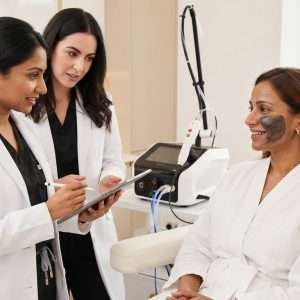
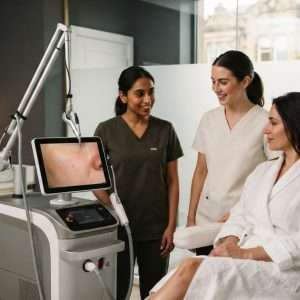
West Yorkshire’s urban environment presents specific challenges for skin health. Patients in Leeds and Bradford often face higher levels of oxidative stress due to urban pollution and environmental toxins. This environmental factor accelerates the breakdown of collagen and leads to premature thinning. We address this by positioning polynucleotides as a foundational repair tool rather than a superficial fix. Our clinicians often combine these boosters with advanced technologies like Morpheus8 to address deep tissue laxity whilst simultaneously repairing the skin’s surface at a cellular level.
A Bespoke Approach to Skin Health
We don’t believe in generic protocols. Every patient presents a unique set of concerns, from periorbital “crepiness” to inflammatory redness. Our clinicians meticulously adjust the depth and placement of every injection to ensure the DNA fragments reach the specific dermal layers where they can most effectively trigger fibroblast activity. This personalised strategy ensures that the treatment is bio-harmonious with your specific skin type. To enhance these results, we also offer an integrated wellness approach. This can include IV drip therapy to ensure your body has the micronutrients required to support the new collagen synthesis triggered by your injections.
Book Your Consultation in Bradford or Leeds
Your transformation journey begins with a detailed clinical skin analysis at one of our West Yorkshire centres. During this initial session, we use advanced diagnostic techniques to map your skin’s current health and identify areas of structural weakness. We’ll discuss your aesthetic goals, review your medical history, and create a roadmap that may involve a polynucleotide skin booster as a standalone treatment or part of a wider rejuvenation plan. Our goal is to provide a natural, refreshed appearance that reflects your health from the inside out.
Ready to experience the future of regenerative aesthetics? Book your polynucleotide consultation at Arden Clinic today and take the first step towards thicker, healthier, and more resilient skin.
Embracing the Future of Regenerative Aesthetics
The shift towards regenerative medicine represents a fundamental change in how we approach skin longevity. By choosing a polynucleotide skin booster, you’re investing in the biological health of your tissue rather than just masking the signs of ageing. We’ve explored how these DNA fragments activate fibroblasts to thicken the skin and repair environmental damage; this provides a level of structural restoration that traditional fillers cannot achieve.
Arden Clinic remains at the forefront of this innovation. As a multi-award-winning aesthetic clinic with expert-led clinical teams in Bradford and Leeds, we combine advanced medical-grade technology with rigorous safety protocols to ensure your results are both visible and secure. Your journey to more resilient, youthful skin starts with a professional assessment of your unique clinical needs. This ensures your treatment plan is as unique as your skin’s own DNA.
Book your expert Polynucleotide consultation at Arden Clinic today to discover how regenerative science can transform your appearance. We look forward to helping you achieve a naturally refreshed look that reflects your inner vitality.
Frequently Asked Questions
Are polynucleotide skin boosters safe for all skin types?
Polynucleotides are generally safe for all skin types due to their high bio-compatibility and ultra-pure formulation. Because they are derived from natural DNA fractions, they rarely trigger an immune response or allergic reaction. However, they are not suitable for individuals with a known fish allergy. Our clinicians conduct a thorough medical screening during your consultation to ensure the treatment is appropriate for your specific health profile.
How long do the results of polynucleotides last?
The results of a full treatment course typically last between six and twelve months. This longevity depends on your individual skin quality, age, and lifestyle factors such as sun exposure and smoking. Because a polynucleotide skin booster works by repairing cellular structures, the improvements are more sustainable than those provided by temporary surface hydrators. We recommend a single maintenance session every six months to preserve the regenerative effects.
Is there any downtime after a polynucleotide treatment?
Downtime is minimal, with most patients returning to their normal activities immediately. You might notice small papules at the injection sites or minor swelling, particularly in the delicate under-eye area. These clinical effects are temporary and usually resolve within 24 to 48 hours. We advise avoiding strenuous exercise, saunas, and direct sun exposure for the first two days to allow the skin to settle.
Can I have polynucleotides if I already have dermal fillers?
Yes, you can safely combine polynucleotides with existing dermal fillers. Whilst fillers provide immediate volume and structural support, polynucleotides focus on improving the health and thickness of the overlying skin. Many of our West Yorkshire patients choose this combination to achieve a more natural result. It ensures the skin looks healthy and refined rather than just volumised.
Does the polynucleotide injection hurt?
The procedure involves minimal discomfort because we apply a high-strength topical numbing cream before the treatment begins. Most patients describe the sensation as a light pinching or pressure rather than pain. Our expert-led team uses ultra-fine needles or blunt-tipped cannulas to ensure the process is as comfortable and precise as possible.
How many sessions will I need to see a difference?
We typically recommend a protocol of three to four sessions to achieve optimal results. These sessions are spaced approximately two to four weeks apart to allow the fibroblast cells to continuously produce new collagen and elastin. Whilst some patients notice an improvement in hydration early on, the full regenerative transformation usually becomes visible around eight to twelve weeks after your final session.
Are polynucleotides better than Profhilo for under-eye circles?
A polynucleotide skin booster is often the superior choice for the periorbital area. Whilst Profhilo is excellent for overall facial hydration and “glow”, it can occasionally cause water-retention puffiness when injected too close to the eyes. Polynucleotides work by physically thickening the thin skin in this zone. This reduces the transparency that causes dark circles without the risk of unwanted swelling or puffiness.
Can I get polynucleotide treatment in Bradford and Leeds?
Arden Clinic offers this advanced regenerative treatment at our award-winning centres in both Bradford and Leeds. We provide convenient access for patients across West Yorkshire, including those travelling from Wakefield and surrounding areas. Each centre maintains the same high safety standards and clinical excellence, ensuring you receive consistent, medical-grade care regardless of which location you choose to visit.