Changes in skin firmness and elasticity develop gradually as collagen and elastin production decline. This reduction affects the structural integrity of the dermis, leading to softening of contours, reduced resilience and the early formation of lines. External factors such as ultraviolet exposure and environmental stress can further influence the rate and extent of these changes.
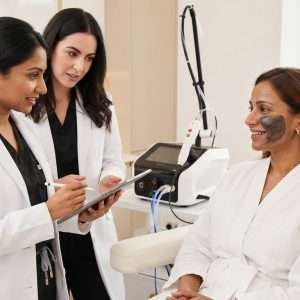
Near infrared skin tightening is a non-invasive treatment approach designed to support dermal regeneration and improve skin quality. By delivering controlled thermal energy into the deeper layers of the skin, it stimulates biological processes that contribute to improved firmness, texture and overall skin integrity. Results develop progressively, reflecting changes within the skin rather than temporary surface effects.
Near Infrared Energy In Aesthetic Medicine
Near infrared energy operates within a wavelength range that allows it to penetrate beneath the skin’s surface and reach the dermis. In aesthetic applications, this energy is used to generate a controlled heating effect within collagen-rich tissue.
This distinguishes it from treatments that act primarily at the epidermal level. Rather than focusing on surface exfoliation or hydration, near infrared technology is used to influence the underlying structures responsible for firmness and elasticity.
Energy delivery is calibrated to ensure uniform heating across the treatment area. This consistency supports a predictable tissue response while maintaining the integrity of the skin surface.
Dermal Heating and Tissue Response
The clinical effect of near infrared skin tightening is based on controlled dermal heating within a defined therapeutic range. Temperatures are sufficiently elevated to initiate a biological response while remaining within parameters that preserve tissue safety.
Collagen fibres respond to heat through immediate contraction, which can produce an initial tightening effect. In parallel, thermal stimulation activates fibroblasts, initiating a regenerative cascade within the dermis.
This process is often described as a controlled thermal stimulus rather than injury, as the response is carefully regulated through device parameters and continuous monitoring. Integrated cooling mechanisms help maintain a stable epidermal temperature, allowing effective energy delivery without compromising the skin barrier.
Over time, these responses contribute to improved dermal density and mechanical strength, supporting a gradual enhancement in skin firmness.
Collagen and Elastin Regeneration
Collagen and elastin are fundamental components of the skin’s structural framework. Collagen provides tensile strength, while elastin supports flexibility and recoil. With age, both the quantity and organisation of these fibres decline, leading to visible changes in skin quality.
Near infrared treatment supports fibroblast activity, encouraging the synthesis of new collagen and elastin fibres. This process extends beyond initial stimulation and progresses through phases of collagen remodelling, during which newly formed fibres are reorganised and integrated into the dermal matrix.
These changes occur gradually. Early improvements may relate to collagen contraction, while further refinement develops over several weeks as regenerative processes continue. The result is a progressive improvement in skin texture, firmness and overall uniformity.
Treatment Depth and Skin Interaction
Near infrared energy is delivered to a depth that targets the dermis while preserving the epidermis. This selective interaction allows treatment of the structures that support the skin without disrupting the surface layer.
Compared with other energy-based technologies, near infrared treatment operates in the mid-dermal range. It does not extend as deeply as certain ultrasound-based approaches, nor does it rely on surface ablation. This makes it particularly well-suited to early changes in skin laxity, when structural support can still be influenced.
Maintaining the integrity of the epidermis is clinically important, as it reduces the risk of irritation and allows patients to resume normal activities without interruption. The use of integrated cooling further supports this balance between efficacy and comfort.
Areas Commonly Treated
Near infrared skin tightening can be applied to a range of facial and body areas with reduced firmness or early-stage laxity.
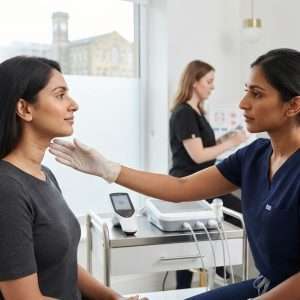
On the face, treatment is commonly focused on the cheeks, jawline and lower face, where softening of contours may become noticeable. The neck is also frequently treated due to its thinner skin and tendency to show early changes in elasticity.
On the body, areas such as the abdomen, upper arms and thighs may benefit from treatment, particularly where mild laxity has developed following weight changes. The technology’s adaptability allows treatment parameters to be adjusted to the characteristics of each area.
Treatment Experience and Progression
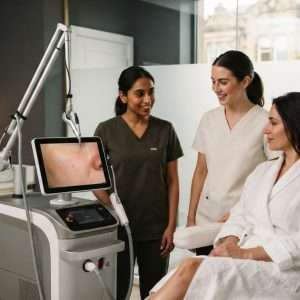
Near infrared skin tightening is generally well tolerated. During treatment, patients experience a controlled warming sensation as thermal energy is delivered into the dermis. Cooling systems operate continuously to maintain comfort and protect the skin surface.
A course of treatments is typically recommended, often performed at intervals of several weeks. This spacing allows time for the biological response within the skin to develop between sessions.
Initial changes may be observed following early treatments, primarily related to collagen contraction. Further improvement develops progressively as collagen synthesis and remodelling continue. The degree and rate of response can vary depending on individual factors, including skin condition, age and treatment area.
There is no requirement for recovery time, although mild erythema or warmth may occur briefly following treatment.
Suitability and Clinical Considerations
Near infrared skin tightening is most appropriate for individuals with mild to moderate skin laxity and early changes in dermal support. It is often chosen by those seeking a non-invasive approach to improving skin firmness without surgical intervention.
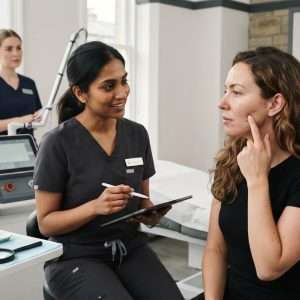
Assessment is an important part of the treatment process. Consideration is given to skin thickness, degree of laxity and overall treatment objectives. This ensures that the approach is aligned with the individual’s presentation and expectations.
Certain factors may influence suitability, including active skin conditions within the treatment area or recent procedures that affect skin integrity. These considerations are reviewed during consultation to ensure treatment is appropriate and delivered safely.
While near infrared technology can provide meaningful improvements in skin quality, it does not replicate the effects of surgical lifting in cases of advanced tissue laxity. In such cases, alternative or combined approaches may be discussed.
Arden Clinic and Near Infrared Skin Tightening
Near infrared skin tightening at Arden Clinic is delivered within a structured clinical framework that prioritises skin health, treatment precision and natural outcomes.
Each facial treatment plan is based on a detailed assessment of skin quality, anatomical structure, and the relationships among different facial or body areas. This allows for a tailored approach that supports consistent and proportionate results.
By combining advanced technology with practitioner expertise, the focus remains on improving dermal integrity in a controlled and considered manner, ensuring outcomes that are aligned with individual characteristics rather than imposed change.
Related Articles
- Treating Skin Laxity Without Surgery
- Introduction To Neurolyft Facial EMS Treatment
- HIFU Skin Tightening Works Beneath The Surface
- Micro Needling for Skin Rejuvenation and Scarring
- HydraFacial Elite For Dehydrated and Dull Skin
Prefer an AI Summary?