Why continue the exhausting cycle of skin irritation and wasted hours on temporary grooming when a clinical, permanent solution is within reach? You’ve likely experienced the persistent sting of shaving rash or the discomfort of recurrent ingrown hairs, feeling as though smooth skin is a fleeting luxury rather than a daily reality. It’s a frustrating trade-off that many accept because they haven’t yet experienced the precision of a medical-grade environment.
This definitive guide reveals how advanced laser hair removal technology provides a safe, permanent, and sophisticated alternative for every skin tone on the Fitzpatrick scale. You’ll discover how the latest multi-wavelength platforms, such as the Alexandrite and Nd:YAG systems, deliver exceptional results whilst prioritising your skin’s integrity. We’ll examine the 2026 UK regulatory landscape, the critical distinctions between medical lasers and IPL, and the methodical process used to ensure total hair reduction. By the end of this article, you’ll understand how to reclaim your time and confidence through a treatment plan built on clinical excellence and technical precision.
Key Takeaways
- Understand the clinical mechanism behind permanent follicle reduction and why melanin-targeting precision is the foundation of effective treatment.
- Learn to distinguish between broad-spectrum IPL and medical-grade laser technology to ensure your investment leads to lasting results rather than temporary reduction.
- Discover how modern multi-wavelength systems make laser hair removal a safe and inclusive option for all skin tones across the Fitzpatrick Scale.
- Master the essential pre-treatment protocols, including the non-negotiable rules regarding sun exposure and grooming methods, to optimise your clinical outcome.
- Recognise the benefits of seeking treatment within a multi-award-winning clinical environment that prioritises medical-grade standards and patient safety.
What is Laser Hair Removal? The Science of Permanent Reduction
This medical aesthetic procedure employs concentrated beams of light to target unwanted hair at the root. This process relies on a principle called selective photothermolysis. The laser emits a specific wavelength of light that is absorbed by the melanin, or pigment, in the hair. This light energy converts to heat, which precisely damages the hair follicle to inhibit future growth without compromising the surrounding skin tissue. The Science of Laser Hair Removal demonstrates how this technology has evolved from experimental physics into a refined clinical standard.
Clinicians use the term ‘permanent reduction’ rather than ‘permanent removal’ because it’s the only physiologically accurate description. While the majority of follicles are disabled, the body’s natural hormonal changes can occasionally stimulate new follicles over time. Choosing a dedicated clinic for laser hair removal rather than a standard beauty centre is vital. A clinical environment ensures that practitioners understand skin physiology and can calibrate the equipment to your specific biological needs, ensuring both safety and efficacy. Precision is paramount.
Understanding the Hair Growth Cycle
Human hair doesn’t grow all at once. It cycles through three distinct phases: Anagen, Catagen, and Telogen. Laser technology is only effective during the Anagen phase, which is the period of active growth. This is when the hair is physically connected to the follicle’s blood supply, allowing the energy to travel down to the root. At any given time, only a portion of your hair is in this active stage. This biological reality is why a course of approximately six to eight sessions is necessary to achieve a comprehensive result. Between your first and third sessions, you’ll typically notice hair becoming finer and lighter. By the eighth session, most clients experience a significant, lasting clearance.
The Clinical Benefits Beyond Smooth Skin
The advantages of this treatment extend far beyond simple aesthetics. Results are transformative. For many, it’s a solution to chronic skin conditions. It effectively eliminates folliculitis and the agony of recurrent ingrown hairs by stopping the hair at the source. Clients often report a marked improvement in skin texture, resolving the ‘strawberry legs’ effect caused by dark, visible pores. Whilst the initial investment is higher than a razor, the long-term cost-effectiveness is undeniable. You’re trading a lifetime of recurring expenses for a definitive clinical outcome.
Medical-Grade Laser vs. IPL: Why the Technology Matters
Many high-street salons offer what they describe as laser hair removal, but they are actually using Intense Pulsed Light (IPL). While IPL uses a broad spectrum of light wavelengths similar to a high-powered light bulb, it lacks the precision of a true medical laser. True lasers produce monochromatic, coherent, and collimated light. This means the beam consists of a single colour, the light waves are in perfect synchronisation, and the beam remains parallel. These physical properties allow for deeper penetration into the dermis, ensuring the energy reaches the follicle without heating the surrounding skin unnecessarily.
Underpowered, salon-grade machines often fail to deliver enough energy to permanently disable the follicle. Instead, they may provide just enough heat to stimulate dormant follicles, a phenomenon known as paradoxical hair stimulation. Conversely, because IPL light is scattered, it carries a higher risk of epidermal burns, particularly on darker skin tones where the surface pigment absorbs the broad-spectrum energy. Medical-grade laser hair removal technology prioritises safety by isolating the exact wavelength needed for your specific biology. Precision is non-negotiable for clinical results.
The Power of Alexandrite and ND:YAG Lasers
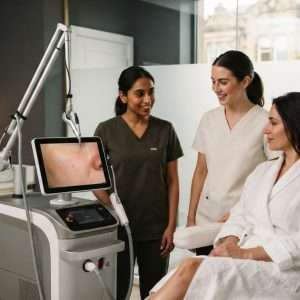
Clinical results depend on selecting the correct wavelength for the patient’s skin and hair type. The Alexandrite laser (755nm) remains the gold standard for treating lighter skin tones and fine hair due to its high melanin absorption. For those with deeper skin tones, the ND:YAG laser (1064nm) is non-negotiable. Its longer wavelength bypasses the surface melanin to target the root safely. Arden Clinic meticulously selects the appropriate technology based on a rigorous assessment of your hair colour and skin type to ensure optimal clearance.
Clinical Standards and Safety Regulations
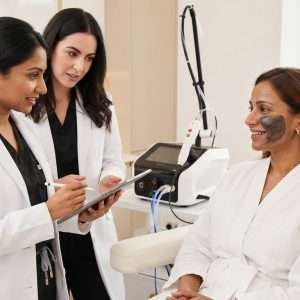
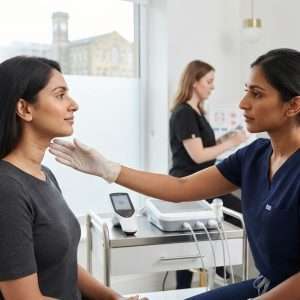
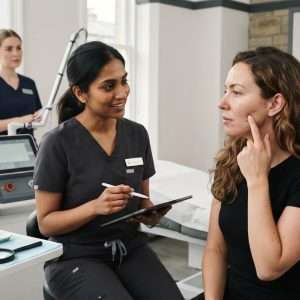
A professional laser hair removal clinical protocol always begins with a comprehensive consultation and a mandatory patch test. This isn’t just a legal necessity; it’s a vital safety step to observe how your skin reacts to the specific laser settings. Reputable clinics operate under strict medical oversight, carry comprehensive insurance, and employ practitioners with advanced clinical training. If you are ready to move beyond temporary grooming, you can explore our medical-grade treatments at our specialised centres.
Laser Hair Removal for All Skin Tones: The Fitzpatrick Scale
The Fitzpatrick Scale is the clinical benchmark used to categorise skin types based on their reaction to ultraviolet light and laser energy. Ranging from Type I (very fair, always burns) to Type VI (deeply pigmented, never burns), this scale is a vital tool for planning a safe laser hair removal journey. Historically, the industry focused on a narrow demographic, but modern medical-grade systems have evolved to serve a global population. We don’t just look at hair colour; we analyse the delicate balance between the pigment in your hair and the melanin in your skin.
A common myth suggests that those with deeper skin tones cannot safely undergo laser treatments. This is outdated. Advanced technology now allows us to distinguish between the melanin in the hair follicle and the melanin in the epidermis. By selecting the correct wavelength, we ensure the energy bypasses the skin’s surface to reach its intended target. This level of precision is why a comprehensive overview of laser hair removal is essential for any patient considering clinical intervention. It highlights the necessity of matching technology to biology for safe, visible results.
Specialised Care for Darker Skin (Fitzpatrick IV-VI)
Treating Asian, Black, and Mixed-heritage skin (Types IV-VI) requires specific safety protocols to prevent post-inflammatory hyperpigmentation or epidermal burns. The ND:YAG 1064nm laser is the gold standard for these skin types. Its long wavelength has a lower affinity for skin melanin, allowing the energy to pass safely through the upper layers of the skin. To further enhance safety, we utilise advanced cooling technologies that chill the skin’s surface before and during each pulse. This protects the epidermis whilst the energy works to disable the follicle deep within the dermis.
Treating Facial Hair and Hormonal Growth
Facial hair often stems from underlying hormonal conditions, such as Polycystic Ovary Syndrome (PCOS). Clinical management of hirsutism requires a sophisticated understanding of hair biology. Treating delicate areas like the jawline, chin, and upper lip demands extreme precision to avoid “stimulated growth,” where underpowered settings actually increase hair density. Our practitioners are experts in managing these sensitive cases, ensuring that every pulse is calibrated to provide permanent reduction without compromising the skin’s texture or health. For our diverse West Yorkshire community, this bespoke approach is the foundation of our clinical excellence.
Preparing for Your Journey: The Clinical Protocol
Achieving clinical excellence in laser hair removal requires more than just advanced technology. It demands a disciplined partnership between the practitioner and the patient. To ensure the highest safety standards and the most effective clearance, you must follow a strict clinical protocol before your first pulse. These steps aren’t merely suggestions; they’re essential for protecting your skin and ensuring the laser energy reaches its intended target.
The most critical rule is the cessation of all root-removal grooming methods. You must stop waxing, plucking, or epilating at least four to six weeks before your session. Because the laser targets the melanin within the follicle, the hair root must be physically present. If the follicle is empty, the treatment cannot work. Shaving, however, is required. We ask that you shave the treatment area 24 hours prior. This ensures the laser energy is directed entirely into the root rather than being wasted on hair above the skin’s surface, which can lead to unnecessary surface heat and irritation.
Sun exposure and tanning present significant clinical risks. Whether it’s a natural tan from a holiday or a bottled fake tan, increased pigment in the epidermis absorbs laser energy that should be destined for the hair follicle. This increases the risk of burns or pigment changes. If you’ve had recent sun exposure, we may need to delay your treatment until your skin returns to its natural baseline. During the session, you’ll feel a sensation often described as a quick, hot ‘snap’ against the skin. It’s a brief discomfort that’s very manageable, particularly with our integrated medical-grade cooling systems.
The Importance of the Patch Test
Safety is our primary concern. We perform a patch test on a small area of skin at least 24 to 48 hours before your full treatment begins. This allows us to monitor your skin’s specific reaction to the laser settings and identify any potential adverse effects early. A patch test is a clinical requirement for insurance and safety, not just an option. This methodical approach ensures your full course of treatment is both safe and effective.
Aftercare: Protecting Your Results
Post-treatment care is vital for maintaining skin integrity. Immediately following your session, apply pure aloe vera to soothe the area and avoid hot showers, steam rooms, or vigorous exercise for 48 hours. Wear loose, breathable clothing to prevent friction amongst treated areas. The most critical aftercare step is the daily application of SPF 50. Treated skin is temporarily more sensitive to UV light, and protection is essential to prevent pigment changes. You may notice ‘shedding’ in the two weeks following your session; this is the dead hair being expelled from the follicle and should not be confused with new growth. To begin your clinical transformation, book your professional consultation at Arden Clinic today.

Why Choose Arden Clinic for Laser Hair Removal in West Yorkshire?
Arden Clinic stands as a multi-award-winning specialist, recognised for delivering medical-grade excellence across West Yorkshire. While many high-street establishments offer hair reduction as a secondary service, we treat laser hair removal as a core clinical discipline. Our centres in Bradford and Leeds provide a sophisticated environment where safety and physical transformation intersect. By choosing a dedicated clinical setting, you ensure that your treatment is conducted using advanced, multi-wavelength technology rather than underpowered salon alternatives.
Every journey begins with a bespoke treatment plan. We recognise that your skin and hair profile is unique, requiring a meticulously calibrated approach to achieve permanent results. Our expertise allows us to seamlessly integrate hair reduction with other advanced skin health protocols. For instance, many clients combine their sessions with Morpheus8 for skin tightening or HydraFacial to maintain optimal skin clarity. This holistic focus on skin health ensures your results are both beautiful and biologically sound.
Expertise You Can Trust in Leeds and Bradford
Our reputation is built on a foundation of integrity and technical precision. We are committed to continuous practitioner training, ensuring our team stays at the forefront of aesthetic innovation. Our strategic locations allow us to provide expert care to clients across Halifax, Keighley, Dewsbury, and Wakefield. We believe in transparency, providing clear pricing and bespoke packages that focus on long-term value. You aren’t just purchasing a session; you’re investing in the expertise of a market leader with deep local roots.
Start Your Transformation Today
The path to smoother skin starts with a professional consultation. During your first visit, we conduct a thorough analysis of your Fitzpatrick skin type and hair density to curate your specific protocol. We don’t rely on guesswork. Instead, we use a methodical tracking system to monitor your progress across your entire course of treatments, adjusting settings in real-time to ensure maximum efficacy. This clinical oversight is what differentiates Arden Clinic from standard beauty providers. Book your clinical consultation at our Bradford or Leeds centres to begin your journey to permanent smoothness.
Secure Your Clinical Transformation for 2026
Transitioning from the frustration of temporary grooming to the certainty of permanent reduction requires a shift in perspective. You’ve now seen how medical-grade technology, specifically the Alexandrite and ND:YAG systems, provides the precision necessary to disable follicles without compromising the skin’s health. This clinical approach ensures that laser hair removal is no longer restricted by skin tone but is a safe, effective option for every individual on the Fitzpatrick scale. By prioritising a professional environment over a standard salon, you’re choosing a path defined by safety and technical excellence.
Arden Clinic remains a market leader in West Yorkshire, combining multi-award-winning clinical excellence with the most advanced aesthetic platforms available. Our practitioners focus on your unique skin profile to deliver a transformation that is both visible and lasting. Book Your Expert Laser Consultation at Arden Clinic to begin your journey toward permanent smoothness under the guidance of meticulous experts. It’s time to invest in a clinical solution that respects your skin and returns your time.
Frequently Asked Questions
Is laser hair removal permanent or does the hair grow back?
Permanent hair reduction is the clinically accurate term for this procedure. The laser effectively disables active hair follicles to prevent future growth. While the results are long-lasting, the body can occasionally produce new follicles due to significant hormonal shifts, though any regrowth is typically much finer and lighter than before.
How many sessions of laser hair removal will I need for best results?
Most clients require a course of 6 to 8 sessions to achieve optimal clearance. This frequency is necessary because laser hair removal only targets hair in the Anagen, or active growth, phase. Multiple appointments ensure that every follicle is treated at the correct point in its biological cycle for maximum efficacy.
Does laser hair removal hurt or is it just uncomfortable?
Most patients describe the sensation as a series of quick, warm snaps against the skin. While it’s more noticeable in sensitive areas, it’s generally considered far less painful than waxing. Our medical-grade systems utilise advanced cooling technology to chill the skin’s surface, which significantly manages discomfort and protects the epidermis during the pulse.
Can I get laser hair removal if I have a tan or use fake tan?
You cannot undergo treatment with a recent natural tan or any traces of fake tan on the skin. The laser is designed to target pigment, and extra colour on the skin’s surface increases the risk of the energy being absorbed by the epidermis rather than the follicle. This increases the risk of burns, so we require the skin to return to its natural baseline before proceeding.
Is laser hair removal safe for people with darker skin tones?
Clinical laser treatments are safe and effective for all skin tones when the correct technology is employed. We use the Nd:YAG laser wavelength for those with deeper skin tones, as it bypasses surface melanin to target the hair root safely. This precision prevents post-inflammatory hyperpigmentation and ensures excellent results for our diverse West Yorkshire community.
What happens if I miss a laser hair removal appointment?
Missing an appointment can disrupt the timing required to catch hair in its active growth phase. Consistency is vital for achieving total hair reduction within the expected timeframe. If you do miss a session, it’s best to reschedule as soon as possible to maintain the momentum of your treatment course and ensure optimal results.
Can laser hair removal help with PCOS-related facial hair?
Laser technology is a highly effective clinical tool for managing hirsutism associated with Polycystic Ovary Syndrome (PCOS). It provides a long-term solution to stubborn facial hair, helping to improve skin texture and boost confidence. Our practitioners use specialised settings to ensure hormonal hair is treated effectively without stimulating surrounding dormant follicles.
How much does laser hair removal cost at a professional clinic?
The cost of treatment depends on the size of the area being treated and the number of sessions required for your specific hair density. Professional clinics provide bespoke pricing during a consultation, ensuring your plan is tailored to your unique requirements. This investment reflects the use of medical-grade technology and the expertise of qualified clinical practitioners.