88% of UK women report feeling self-conscious about unwanted facial hair, yet many remain trapped in a cycle of temporary and often painful salon treatments. If you’re tired of the skin irritation caused by daily shaving or the stubborn ingrown hairs that frequently appear along the neck and jawline, you aren’t alone. These routines are exhausting and often leave a visible shadow beneath the skin that compromises your self-confidence.
We understand that facial hair removal requires a precise, clinical approach rather than a standard beauty service. This guide provides the essential information you need regarding laser hair removal face treatments at our West Yorkshire clinics, where we utilise medical-grade technology to achieve permanent hair reduction. We’ll detail the advanced Soprano Titanium system we use, address how we manage hormonal hair growth, and explain the rigorous safety standards that define our specialist practice.
Key Takeaways
- Understand the clinical mechanism of selective photothermolysis and how medical-grade lasers precisely target facial hair follicles for long-term reduction.
- Discover why professional laser hair removal face treatments provide a more sustainable and cost-effective solution than the repetitive cycle of waxing or threading.
- Learn how we utilise the Fitzpatrick Skin Scale and advanced technology to deliver safe, visible results for every complexion and skin tone.
- Gain a medical perspective on managing hormonal hair growth and Hirsutism through specialised maintenance plans designed for conditions such as PCOS.
- Explore what to expect during a clinical consultation at our award-winning Bradford or Leeds locations to ensure your treatment is both safe and effective.
Understanding Facial Laser Hair Removal: How Medical-Grade Technology Works
Facial laser hair removal represents a sophisticated leap beyond traditional grooming. It’s a clinical, light-based therapy designed to target unwanted follicles with extreme precision. Unlike shaving or waxing, which only address the hair above or just below the surface, laser hair removal face treatments aim to neutralise the follicle’s regenerative capacity at the root. This is not merely a cosmetic adjustment; it’s a targeted medical procedure that requires expert calibration.
The core scientific principle behind this process is selective photothermolysis. This involves delivering a specific wavelength of light that is absorbed by the melanin, or pigment, within the hair. When the light energy is absorbed, it converts into heat, causing thermal damage to the follicle while leaving the surrounding epidermis unharmed. Understanding how laser hair removal works is essential for setting realistic expectations. The efficacy of the treatment depends on the contrast between hair colour and skin tone, alongside the specific technology used by the clinician.
Treating the face requires a fundamentally different approach than treating the legs or back. Facial skin is thinner, more sensitive, and more prone to hormonal fluctuations. It also possesses a higher concentration of hair follicles per square centimetre. This necessitates a meticulous, bespoke clinical strategy to ensure both safety and visible results. Every pulse must be measured to protect the delicate facial tissue whilst delivering enough energy to be effective.
The Three Phases of Hair Growth: Why Timing Matters
Hair doesn’t grow continuously. It moves through a cycle consisting of three distinct stages: Anagen, Catagen, and Telogen. The Anagen phase is the active growth period where the hair is firmly attached to the dermal papilla. This is the only stage where laser energy can successfully travel down the hair shaft to destroy the follicle’s growth centre. Because only a percentage of your facial hair is in this phase at any given time, a structured programme of multiple sessions is required. This ensures every follicle is treated during its window of vulnerability.
Medical-Grade vs. Salon-Grade Equipment
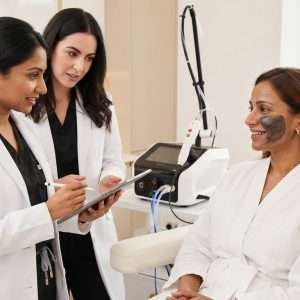
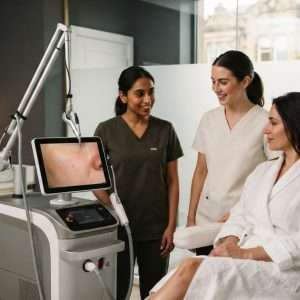
There’s a significant distinction between high-powered medical lasers and the low-energy Intense Pulsed Light (IPL) devices often found in standard beauty salons. Medical-grade systems, such as the Soprano Titanium, provide deeper follicle penetration and more consistent energy delivery. These professional systems also feature advanced integrated cooling technologies. These mechanisms protect the delicate facial skin by maintaining a stable surface temperature, ensuring the procedure remains comfortable whilst delivering the intensive energy required for permanent hair reduction.
Comparing Methods: Why Laser Surpasses Waxing and Threading for Facial Hair
Whilst waxing and threading offer immediate hair removal, they remain temporary solutions that often compromise the skin’s long-term health. Shaving is equally problematic; it merely clips the hair at the surface, frequently leaving a visible “shadow” where the dark root remains embedded in the follicle. Professional laser hair removal face treatments address these issues by targeting the hair at its source, effectively eliminating the root and the associated shadow effect for a clearer, more uniform complexion.
Mechanical hair removal methods involve repetitive physical trauma to the delicate facial epidermis. Constant pulling and tugging can lead to micro-tears, skin laxity, and even premature ageing in sensitive areas like the upper lip or jawline. By choosing a medical-grade laser, you avoid this physical stress. It’s important to consult with specialists who understand laser hair removal risks and side effects to ensure your treatment is tailored to your specific skin sensitivity, providing a safer alternative to aggressive manual methods.
The End of Ingrown Hairs and Folliculitis
Ingrown hairs occur when a hair is unable to breach the skin surface and instead curls back into the follicle, causing painful inflammation and potential scarring. Traditional methods often exacerbate this by distorting the hair’s natural growth path. Laser therapy solves this by thinning the hair and eventually neutralising the follicle entirely. This process significantly reduces the risk of folliculitis and hyperpigmentation, resulting in a refined skin texture that allows for seamless makeup application and a natural, healthy glow.
Long-Term Financial and Time Investment
The cumulative cost of a lifetime of waxing or threading is substantial. When you calculate the expense of appointments every three to four weeks over several decades, the initial investment in a clinical laser course is far more economical. Beyond the financial aspect, there’s the value of reclaimed time. Releasing yourself from the burden of daily maintenance or monthly salon visits provides a level of freedom that temporary methods cannot match. Furthermore, moving away from disposable razors and wax strips is a more sustainable choice for the environment. If you’re ready to transition to a permanent solution, our clinical team can help you explore a bespoke treatment plan tailored to your goals.
Safety and Skin Tones: Achieving Results for Every Complexion in West Yorkshire
A common misconception persists that clinical laser treatments are only effective for those with fair skin and dark hair. This outdated view fails to account for the significant technological advancements that have redefined the industry. Modern laser hair removal face procedures are now highly inclusive, provided they are managed by clinicians who understand the nuances of the Fitzpatrick Skin Scale. This scale categorises skin types from I to VI based on melanin content and reaction to UV exposure, allowing us to calibrate our equipment with surgical precision.
The primary challenge in treating diverse complexions is ensuring the laser distinguishes accurately between the melanin in the hair follicle and the melanin in the surrounding skin. Advanced medical-grade systems utilise specific wavelengths and pulse durations to bypass the epidermis safely. According to Mayo Clinic’s guide to laser hair removal, the success of the procedure depends heavily on this contrast, which is why choosing the correct laser technology is paramount for safety. This is especially true for delicate facial areas where the skin is thinner and more prone to pigmentary changes.
ND:YAG vs. Alexandrite: Choosing the Right Wavelength
The choice of wavelength is the most critical factor in treating different ethnicities. The Alexandrite laser, operating at 755nm, is exceptionally effective for lighter skin tones because its energy is highly absorbed by melanin. Conversely, the ND:YAG laser at 1064nm is the undisputed gold standard for darker skin tones. Its longer wavelength penetrates deeper, bypassing the skin’s surface pigment to target the follicle directly. A reputable clinic must offer both technologies to ensure every patient receives a safe, bespoke treatment plan.
Minimising Risks and Maximising Comfort
Safety protocols are particularly stringent when treating delicate facial zones like the upper lip or chin. Every patient must undergo a mandatory patch test at least 24 to 48 hours before their first session. This allows us to observe the skin’s reaction and adjust parameters before proceeding with a full treatment. During the procedure, we utilise integrated sapphire cooling tips to manage the heat sensation, ensuring the experience remains comfortable. Post-treatment, the application of a high-factor SPF is non-negotiable. Facial skin is especially vulnerable to UV damage following laser exposure; consistent protection is essential to prevent post-inflammatory hyperpigmentation and maintain the integrity of your results.
The PCOS Connection and Hormonal Hair Growth: A Clinical Perspective
Polycystic Ovary Syndrome (PCOS) affects approximately one in ten women in the United Kingdom, often presenting through a distressing symptom known as Hirsutism. This condition triggers the growth of thick, terminal hairs in male-pattern distributions, particularly across the chin, upper lip, and jawline. For many women, the emotional impact of this persistent growth is profound, often leading to a significant decline in self-esteem and a reliance on aggressive daily hair removal routines. Clinical laser hair removal face treatments offer a transformative alternative, providing a medical solution to a hormonal challenge.
Managing expectations is a cornerstone of our clinical practice. Whilst medical-grade lasers are exceptionally effective, we prefer the term “permanent hair reduction” over “removal” when discussing PCOS. Because PCOS is a chronic hormonal condition, the body may continue to stimulate new hair follicles over time. Laser therapy successfully neutralises existing active follicles, but it cannot prevent the underlying hormonal drive from activating dormant ones. Recognising this distinction is vital for a transparent and successful patient-practitioner relationship.
Tailoring Treatments for Hormonal Imbalances
Hormonal hair growth is typically more resilient than standard body hair, necessitating a bespoke clinical strategy. Patients with PCOS often require a more intensive initial course, typically ranging from 8 to 12 sessions, compared to the standard six sessions recommended for non-hormonal growth. Our clinicians often coordinate with a patient’s medical management plan, as stabilising androgen levels through medication can significantly enhance the efficacy of laser therapy. We focus on high-fluence delivery to ensure that even the most stubborn, deep-rooted terminal hairs are effectively targeted.
Long-Term Maintenance for Lasting Confidence
Consistency is the defining factor in managing hormonal facial hair. Once the initial course is complete, a structured maintenance programme is essential to address any new follicle activation. These top-up sessions, usually scheduled every few months, ensure the skin remains smooth and prevents the return of the dense growth patterns associated with Hirsutism. We provide a supportive, non-judgemental environment where patients can discuss their progress openly. Reclaiming your confidence starts with a professional assessment; you can book a clinical consultation at Arden Clinic to discuss a tailored management plan for your specific needs.

Your Journey at Arden Clinic: Expert Laser Care in Bradford and Leeds
Arden Clinic has established itself as a premier destination for laser hair removal face treatments across West Yorkshire. Our award-winning status isn’t merely a badge of honour; it’s a reflection of our commitment to clinical excellence and meticulous patient care. Whether you visit our Bradford or Leeds facility, you’re entering an environment where medical-grade technology meets aesthetic refinement. We prioritise transparent communication, ensuring you understand every aspect of your transformation before the first pulse of light is delivered. Our goal is to provide a results-driven experience that respects both your time and your skin health.
We believe that successful hair reduction is part of a broader journey toward skin confidence. This is why our clinicians often recommend integrating laser sessions with other advanced treatments. For example, a HydraFacial can provide essential hydration and exfoliation between appointments, whilst Morpheus8 can be utilised to refine skin texture and firmness once your hair reduction goals are achieved. This holistic approach ensures that your complexion remains as healthy as it is smooth.
The Consultation and Patch Test Process
Your journey begins with a comprehensive clinical consultation. We don’t believe in a one-size-fits-all approach. Our experts conduct a detailed skin analysis and a thorough medical history check to identify any potential contraindications or hormonal factors. A mandatory patch test is performed at least 24 to 48 hours prior to your first session. This step is essential; it’s the only way to verify skin compatibility and determine the precise energy settings required for your unique hair density and skin type. This meticulous preparation ensures your personalised treatment plan is both safe and highly effective.
Pre-Treatment and Aftercare Essentials
Achieving optimal results requires a partnership between the clinician and the patient. One of the most critical requirements is the “no plucking” rule, which must be observed for at least four weeks prior to your appointment. Because the laser targets the pigment in the root, plucking or waxing removes the target entirely, rendering the treatment ineffective. You should shave the treatment area approximately 24 hours before your visit to ensure the laser energy is focused beneath the skin surface.
Post-treatment care is equally vital for maintaining the integrity of the facial epidermis. Following your session, you may experience mild erythema, similar to a light sunburn. We advise avoiding intense heat, such as saunas, steam rooms, or hot showers, for 24 to 48 hours. To support long-term skin vitality, we recommend using medical-grade skincare and high-factor SPF daily. This protects the skin whilst it’s in its most vulnerable state and prevents the development of sun-induced pigmentation.
Your Path to Lasting Facial Clarity
Achieving permanent hair reduction is more than just a cosmetic upgrade; it’s a commitment to long-term skin health and boosted self-assurance. By choosing a clinical environment over a standard salon, you ensure that your treatment is calibrated for your specific Fitzpatrick skin type and hormonal profile. This meticulous approach eliminates the risks of mechanical irritation and the persistent frustration of ingrown hairs whilst providing a sustainable solution for your grooming routine.
Our multi-award-winning clinics in Bradford and Leeds utilise advanced medical-grade technology to deliver visible, reliable results. We understand that laser hair removal face procedures require a high level of clinical precision to navigate the unique sensitivities of facial tissue. Transitioning away from temporary methods like waxing or threading allows you to reclaim your time and enjoy a consistently smooth, shadow-free complexion.
If you’re ready to start your journey toward a hair-free future, our team of meticulous experts is here to guide you through every stage of the process. Book your expert facial laser consultation at Arden Clinic today and experience the transformation that medical-grade excellence provides.
Frequently Asked Questions
Does facial laser hair removal hurt?
Facial laser treatments are generally well-tolerated and described as a mild snapping or prickling sensation. Modern medical-grade lasers, like the Soprano Titanium used in our clinics, feature advanced cooling systems to maintain surface temperature and ensure comfort. It’s significantly less painful than waxing or threading. The sensation is brief and subsides immediately after the laser pulse, making the procedure manageable even for those with sensitive facial skin.
How many sessions will I need for my face?
A standard course typically consists of 6 to 8 sessions to achieve optimal results. However, individuals with hormonal conditions like PCOS may require 10 to 12 sessions followed by periodic maintenance. This is because facial hair has a faster growth cycle and higher follicle density than body hair. We monitor your progress at every stage to adjust the clinical parameters of your treatment and ensure maximum efficacy.
Can I have laser hair removal if I have a tan?
No, you must avoid sun exposure, sunbeds, and self-tanning products for at least four weeks before your laser hair removal face session. A tan increases the melanin in your skin, which can cause the laser to target the epidermis instead of the follicle. This significantly raises the risk of burns or hyperpigmentation. We require a minimum of four weeks for the tan to fade before proceeding safely with your clinical treatment.
Will facial laser hair removal cause breakouts or acne?
Some patients may experience a temporary purging effect or folliculitis, which can resemble small breakouts. This occurs because the laser heat can draw impurities to the surface or cause minor inflammation in the follicle. These symptoms typically resolve within 48 hours. Using medical-grade aftercare and avoiding heavy creams immediately after your session will help keep the pores clear and the skin calm whilst it heals.
Can I wear makeup immediately after my treatment?
You should wait at least 24 hours before applying makeup to the treated area. The skin’s pores are open and sensitive following a laser session, and cosmetic products can lead to irritation or clogged follicles. If you must apply coverage, we recommend using a clean, mineral-based foundation that allows the skin to breathe. Always ensure your application tools are sanitised to prevent bacterial transfer to the delicate facial tissue.
How long do I need to wait between facial laser sessions?
Facial treatments are typically spaced 4 to 6 weeks apart. This interval is shorter than body treatments because facial hair grows at a more rapid rate. Spacing your sessions correctly ensures that we catch the maximum number of hairs in the Anagen phase. Adhering to the schedule provided by your clinician is essential for achieving the most effective long-term hair reduction and maintaining the momentum of your results.
Is facial laser hair removal permanent?
Laser technology provides permanent hair reduction rather than total removal. Most patients see a significant reduction in hair density after a full clinical course. Any remaining hairs are usually much finer and lighter in colour. Whilst the destroyed follicles won’t regrow, new follicles can be activated by hormonal changes. This is why we recommend occasional top-up sessions to maintain your smooth results over the long term.
Can men have laser hair removal on their face and neck?
Yes, laser hair removal face treatments are highly effective for men, particularly for managing beard shaping and preventing painful neck irritation. Many male patients seek treatment to eliminate the beard shadow or to resolve chronic ingrown hairs caused by daily shaving. The procedure provides a more refined appearance and reduces the time spent on grooming. For a comprehensive overview of how this technology addresses the specific needs of male patients, our mens laser hair removal clinical guide covers everything from advanced technology to UK licensing frameworks. It’s a popular choice for those seeking a sharp, professional look without the hassle of a razor.