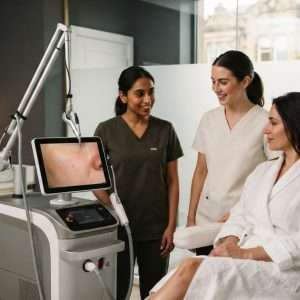
A truly successful cover-up isn’t just about hiding old ink; it’s about strategically lightening it to allow your artist’s new vision to shine. If you’re feeling restricted by a dark or “muddy” design, you’re part of the 52% of UK young adults who admit to tattoo regrets. Choosing professional fading a tattoo for a cover up Leeds is often the most effective way to transform a heavy, dated piece into a clean canvas. Our Picosecond laser technology is designed to break down stubborn ink particles, which may help your tattoo artist incorporate the intricate detail and vibrant colours you actually want.
In this clinical guide, you’ll discover how advanced laser fading differs from full removal and why it’s a game-changer for your next tattoo project. We’ll outline how our assessment-led approach, established since 2011, ensures your skin remains healthy whilst preparing it for new ink. From understanding realistic timelines to seeing how Picosecond pulses protect your skin’s integrity, we’ll provide the clarity you need to move forward with confidence. Results always vary between individuals, but starting with a professional consultation is the first step towards a superior final result.
Key Takeaways
- Understand why lightening existing ink is essential for avoiding restricted “black-out” designs and giving your tattoo artist the creative freedom to use lighter colours and finer details.
- Learn how Picosecond laser tattoo removal uses photo-acoustic pressure waves to shatter ink into tiny particles, which can improve the appearance of heavy designs whilst protecting the surrounding skin.
- Discover the typical timeline for fading a tattoo for a cover up Leeds, including the necessary 6 to 8 week healing gaps required between laser sessions to ensure optimal skin recovery.
- Find out why choosing a multi-award-winning clinic within a professional medical centre environment ensures your treatment is managed with the highest standards of safety and clinical excellence.
Why Fading Your Tattoo is the Key to a Superior Cover-up
Fading isn’t just an incomplete removal; it’s a strategic preparation that provides a clean foundation for your next piece of art. When a tattooist faces a dark, heavily saturated design, their creative options are severely limited. They’re often forced into “black-out” styles or very heavy, dark imagery to ensure the old ink doesn’t “ghost” through the new work. By choosing professional fading a tattoo for a cover up Leeds at a clinic established since 2011, you effectively reset the canvas. This process uses modern tattoo removal techniques to lighten the pigment whilst meticulously protecting the skin’s integrity. Unlike aggressive, non-clinical methods that can lead to scarring, our approach prioritises safety within a professional medical centre environment.
This clinical lightening unlocks genuine artistic freedom. It allows your tattooist to use vibrant colours, softer shades, and intricate line work that would otherwise be obscured by the original design. Instead of a muddy, dark compromise, you achieve a piece that looks intentional and professional. Proper fading ensures the new ink sits correctly in the dermis without “ink clash” from the previous layers, which can improve the appearance of the final design significantly.
Fading vs. Full Removal: Which is Right for Your Project?
The primary difference between these two paths is the ultimate objective. Full removal aims to return the skin to its original state, which can be a lengthy process. Conversely, fading is a targeted effort designed to assist your tattoo artist. Because the goal is to lighten rather than erase, it typically requires significantly fewer sessions. Your artist’s vision for the new piece dictates exactly how much fading is required; some may only need the darkest outlines softened, whilst others require a broader lightening to accommodate lighter palettes. A successful fading a tattoo for a cover up Leeds provides the perfect balance between skin health and artistic potential.
How Picosecond Laser Technology Precision-Fades Old Ink
Picosecond laser technology represents a significant leap from traditional Nanosecond (Q-Switch) systems. Whilst older lasers rely on photothermal energy to break down pigment, the Picosecond approach utilises a photo-acoustic effect. This creates a rapid pressure wave that shatters ink into microscopic, dust-like particles. Because the energy is delivered in trillionths of a second, the laser interacts with the ink without over-heating the surrounding tissue. This precision is vital when fading a tattoo for a cover up Leeds, as it minimises thermal damage and preserves the skin’s natural texture for your future artwork.
Why Clinical Expertise Matters for Fading
Achieving the perfect fade requires more than just high-end machinery; it demands a meticulous clinical assessment. During your initial consultation, we consider factors such as the age of the tattoo and the specific pigments used, as these variables significantly influence how the laser interacts with your skin. Such granular detail is essential for managing different skin tones safely and effectively. A similar commitment to precision is evident across our specialised services, such as laser lip depigmentation, where accuracy is paramount. If you’re planning a new design and need a professional assessment, our team is here to help you prepare your canvas.
Planning Your Fading Journey: Timelines and Artist Collaboration
A successful cover-up requires a methodical timeline to ensure the skin is adequately prepared for new ink. For most clients, achieving a significant fade requires between 3 and 6 sessions. This isn’t a process to be rushed; a mandatory gap of 6 to 8 weeks between laser treatments is essential. This interval allows your body’s immune system to clear the shattered ink particles and ensures the skin heals completely before the next application. Following FDA guidance on laser tattoo removal, we prioritise skin health to prevent texture changes that could interfere with your future artwork.
The most critical phase is the final “settling period”. You must wait at least 12 weeks after your last laser session before re-tattooing the area. This duration allows the internal inflammatory response to subside and the remaining pigment to stabilise. We recommend maintaining an open dialogue with your tattoo artist throughout the process of fading a tattoo for a cover up Leeds. Providing them with clear progress photos allows them to refine their design as the canvas lightens, ensuring the best possible outcome for your project.
What to Expect During and After Your Session
Treatment sensation is often described as a sharp, quick snap against the skin. Immediately following the session, it’s common to see redness, slight swelling, or a temporary “frosting” effect. These are typical clinical responses that usually subside within a few days. Whilst results vary between individuals based on ink density and immune health, following a strict aftercare routine is vital for skin integrity:
- Keep the treated area clean and dry for the first 24 to 48 hours.
- Protect the skin from direct sun exposure to prevent pigmentation changes.
- Avoid picking or scratching the area as it heals.
- Hydrate well to support your body’s natural ink clearance process.

Professional Tattoo Fading at Arden Clinic Leeds and Bradford
Arden Clinic has been a leader in aesthetic laser treatments since 2011, earning multi-award-winning status every year since 2018. We operate within professional medical centre environments in Leeds and Bradford, ensuring that every client receives treatment in a setting that prioritises hygiene and clinical excellence. Unlike standard tattoo studios, we focus exclusively on the intersection of science and skin health. Our practitioners have administered hundreds of thousands of treatments, bringing a level of seasoned expertise that is essential when fading a tattoo for a cover up Leeds.
Every fading project begins with a comprehensive, assessment-led approach. We understand that ink composition and depth vary between individuals, so we don’t use a “one size fits all” setting. Instead, we tailor our Picosecond laser protocols to your specific skin type and the requirements of your future tattoo. By choosing our specialist clinic for fading a tattoo for a cover up Leeds, you benefit from a decade of clinical experience and advanced international training. Our commitment to safety is reinforced through rigorous practitioner training and the use of evidence-led technology, ensuring your skin’s integrity is maintained throughout the process; for those interested in the standards of professional aesthetic tattooing, you can check out Advanced PMU to learn more about their specialist training and services.
Your Consultation at our Yorkshire Centres
We invite you to visit our Leeds or Bradford clinics for a professional assessment. During this session, we’ll examine your existing ink and discuss your goals for the new design. Whilst complete removal cannot be guaranteed due to the complex nature of tattoo pigments, significant fading is achievable for most clients. This creates the clean canvas your artist needs to deliver a high-quality result without the limitations of dark, old ink. To begin your transformation and receive a bespoke fading plan, please contact us to book your initial consultation. Our team is dedicated to providing the professional standards and individualised care your skin deserves.
Prepare Your Canvas for Artistic Excellence
Choosing professional fading a tattoo for a cover up Leeds is the most effective way to ensure your new artwork isn’t compromised by heavy, saturated ink. By utilising advanced Picosecond technology, we can precision-fade existing designs whilst meticulously protecting the health and integrity of your skin. This clinical approach provides your tattoo artist with the genuine creative freedom to use lighter colours and intricate details that would otherwise be impossible to achieve.
Arden Clinic has been an established specialist since 2011, operating from within professional medical centre environments in Yorkshire. As a multi-award-winning clinic every year since 2018, we prioritise individualised care and evidence-led protocols. Whilst results vary between individuals, our meticulous assessment-led process is designed to support your body’s natural ink clearance. Don’t settle for a dark, restricted design when you can achieve the superior, professional finish your skin deserves. We look forward to helping you start your journey toward a better cover-up.
Frequently Asked Questions
How many laser sessions are needed to fade a tattoo for a cover-up?
Most clients require between 3 and 6 sessions to achieve sufficient lightness for a new design. The exact number depends on factors like ink depth and pigment density, which we evaluate during an initial assessment. Because the goal is to provide a workable canvas rather than clear the skin entirely, this process is often more efficient than full removal. Results vary between individuals, so we tailor every plan to your specific tattoo.
Can I get a cover-up tattoo immediately after laser fading?
It’s vital to wait at least 12 weeks after your final laser treatment before starting your new tattoo. This period allows the skin’s natural healing process to conclude and ensures the area is stable enough to hold new pigment effectively. Starting too soon can lead to poor ink retention or skin irritation. We encourage you to discuss this timeline with your artist to ensure your project stays on track for success.
Does fading a tattoo for a cover-up cost less than full removal?
Generally, fading a tattoo for a cover up Leeds involves a lower total investment than full removal because fewer sessions are typically required to reach the desired lightness. Whilst we cannot quote exact costs without a clinical assessment, the reduced number of treatments often makes it a more efficient route. Our focus remains on providing professional standards and advanced Picosecond technology to help you achieve the best possible foundation for your new artwork.
Will laser fading cause scarring that ruins my new tattoo?
When performed by experienced practitioners in a professional medical centre environment, the risk of scarring is significantly reduced. Our Picosecond laser tattoo removal uses a photo-acoustic effect rather than excessive heat, which helps protect the skin’s texture. Maintaining skin integrity is our priority, ensuring the area remains healthy for your artist to apply new ink. Following our specific aftercare protocols is also vital for preventing any adverse skin reactions during healing.
Is Picosecond laser better than Q-switch for fading old ink?
Picosecond technology is widely considered the gold standard for tattoo fading because it shatters ink into much smaller particles than older Q-switch systems. This allows the body to clear the pigment more efficiently, often resulting in fewer sessions. It’s particularly effective for stubborn blues and greens and carries a lower risk of thermal damage. Since 2011, we’ve utilised these advanced technologies to provide our Yorkshire clients with superior, evidence-led results.