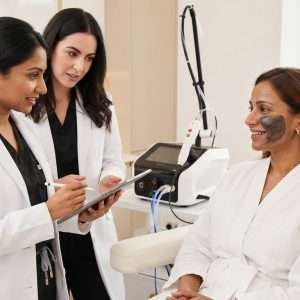
Chemical peels are a clinically established treatment used to improve skin tone, refine texture and reduce the appearance of pigmentation. By supporting controlled exfoliation and cellular renewal, chemical peels help restore clarity and balance within the skin.
At Arden Clinic, chemical peels are delivered within a structured and considered framework. Each treatment is selected based on skin type, tone, and condition, ensuring that concerns such as pigmentation, acne, and uneven texture are addressed with precision.
Chemical Peels and Skin Renewal
Chemical peels are designed to support and accelerate the skin’s natural renewal process. As cell turnover slows, a buildup of uneven or damaged surface cells can lead to dullness, a rough texture, and a loss of clarity.
Through controlled exfoliation, chemical peels remove these surface layers while stimulating activity within the skin. This process supports smoother texture, improved brightness and a more refined overall appearance.
Certain chemical peels also support collagen activity, contributing to improved skin structure and skin quality.
Chemical Peels for Pigmentation
Chemical peels are widely used to improve visible pigmentation, including melasma, sun damage and post-inflammatory discolouration.
Pigmentation develops when melanin production becomes uneven within the skin. This can lead to patches of discolouration that are often resistant to topical skincare alone.
Chemical peels help to improve this by encouraging the removal of pigmented cells and supporting a more even distribution of melanin. With a structured approach, the skin appears clearer and more uniform in tone.
Managing Pigmentation
Treating pigmentation requires a controlled and considered approach. Inappropriate or overly aggressive treatments can disrupt the skin and lead to further imbalance.
Professional chemical peels are selected to gradually manage melanin activity. This is particularly important in cases such as melasma, where consistency and stability are essential.
Skin tone is always considered when planning treatment. Approaches are adapted to reduce the risk of post-treatment pigmentation changes and to support safe, progressive improvement.
Chemical Peel Types
Chemical peels are categorised according to the depth at which they act within the skin. Selecting the appropriate type of peel is essential to achieving balanced and effective results.
| Peel Type | Skin Level | Suitable Concerns | Expected Skin Response |
|---|---|---|---|
| Superficial | Surface layers | Dullness, mild uneven tone, maintenance | Minimal to no visible downtime |
| Medium Depth | Upper to mid layers | Pigmentation, uneven texture, post-acne marks | Light flaking or dryness may occur |
| Advanced | Deeper layers | More established pigmentation and visible skin ageing | More structured recovery required |
The choice of peel is based on a detailed assessment of the skin. This ensures that the treatment is appropriate for both the concern being addressed and the overall condition of the skin.
Chemical Peels for Different Skin Concerns
Chemical peels can be adapted to address a range of skin concerns.
- For pigmentation, chemical peels support a more even skin tone by reducing visible discolouration.
- For acne, they help to reduce congestion and improve clarity.
- For uneven texture, they refine the surface of the skin and support a smoother appearance.
- For early signs of ageing, they help improve firmness and overall skin quality.
Each treatment is selected with consideration of individual skin characteristics to ensure a balanced outcome.
Suitability and Skin Assessment
A professional consultation is an essential part of any chemical peel treatment. Skin type, tone and sensitivity are carefully assessed to determine the most appropriate approach.
Factors such as current skincare use, previous treatments and general skin condition are taken into account. This allows for a treatment plan that is both safe and effective.
Treatment Planning
Chemical peels are most effective when delivered as part of a structured treatment plan. A course of treatments allows for gradual and consistent improvement in skin tone and texture.
The number of treatments and the interval between sessions are determined by the type of peel and the condition of the skin. Maintenance treatments may be recommended to preserve results and support ongoing skin health.
Frequency and Maintenance of Chemical Peels
The frequency of chemical peel treatments depends on the depth of the peel and the skin’s needs.
Superficial peels may be performed more regularly as part of a maintenance programme. Medium-depth and advanced peels are spaced further apart to allow the skin to recover fully.
Ongoing maintenance treatments help to preserve improvements in tone, clarity and texture.
Skin Response Following Chemical Peels
Following treatment, the skin enters a renewal phase. This may include light flaking, dryness or a feeling of tightness, depending on the depth of the peel.
Some chemical peels produce minimal visible change while still improving skin quality. Others involve a more noticeable renewal process.
Improvements develop progressively, with clearer tone, smoother texture and improved overall skin condition.
Expected Results and Treatment Outcomes
Results from chemical peels develop gradually as the skin renews. Improvements are typically seen in clarity, texture and overall skin tone.
The level of improvement depends on the concern being treated, the type of peel selected and the consistency of treatment. Pigmentation concerns often require a course of treatments combined with appropriate aftercare.
A structured approach supports predictable and balanced outcomes over time.
Aftercare and Skin Protection
Aftercare plays an important role in the outcome of chemical peel treatments. The skin should be supported with gentle skincare during the renewal phase.
Daily sun protection is essential for maintaining results and reducing the risk of further pigmentation. Guidance is provided to ensure that the skin remains balanced and protected as it recovers.
Chemical Peels and Skin Tone Considerations
Chemical peels can be suitable for a wide range of skin tones when selected and delivered appropriately.
Treatment approaches are adapted to ensure that the skin is managed safely, with particular attention given to pigmentation response. Gradual and controlled treatment is prioritised to maintain balance within the skin.
Combining Chemical Peels with Other Treatments
Chemical peels can be incorporated into a broader treatment plan to enhance overall results.
They may be used alongside treatments such as microneedling or professional skincare programmes to support skin renewal and improve texture. Treatment sequencing is carefully planned to ensure that the skin remains balanced.
Chemical Peels at Arden Clinic
Chemical peels at Arden Clinic are delivered within a clinical and structured framework, ensuring a high standard of care throughout the treatment process.
A range of advanced chemical peels allows treatments to be selected based on individual skin concerns, including pigmentation, acne, and uneven texture.
Each facial treatment begins with a detailed consultation, allowing for accurate assessment and appropriate treatment selection. Practitioners take a considered approach to ensure that results are achieved gradually and safely.
Ongoing support is provided throughout the treatment process, including aftercare guidance and maintenance recommendations.
Chemical Peels and Skin Health
Chemical peels can form part of a long-term strategy for maintaining skin clarity and balance. Regular treatments support consistent renewal and help to preserve improvements in tone and texture.
When combined with appropriate skincare, chemical peels can improve skin resilience and overall condition.
A Considered Approach to Skin Clarity
Chemical peels offer a reliable and clinically supported method of improving skin tone, texture and pigmentation.
At Arden Clinic, each treatment is carefully planned and delivered with attention to individual skin needs. A consultation provides the opportunity to assess suitability and define a treatment approach that supports both immediate improvement and skin health.
Related Articles
- Award Winning Facial Treatments Designed to Rejuvenate and Restore
- The Science of Chemical Peels Explained
- Which Chemical Peel is Right for Me?
- The Perfect Peel
- Transform Your Skin with Facial Treatments at Arden Clinic
Prefer an AI Summary?