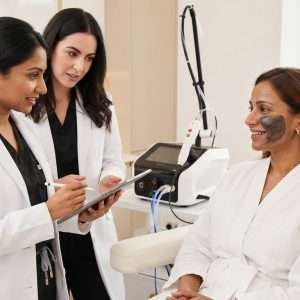
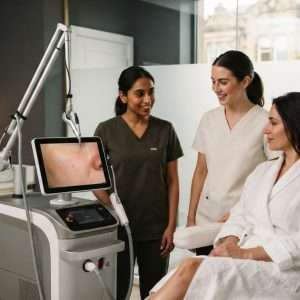
The belief that an effective skincare routine can be found entirely in a chemist’s aisle is one of the most expensive misconceptions in modern aesthetics. Whilst high-street products offer subtle maintenance, they often lack the concentration necessary to trigger genuine cellular renewal. Professional chemical peels represent a bridge between topical care and surgical intervention, offering a meticulously controlled method to resurface the skin and address deep-seated pigmentation. Following the 2024 FDA warnings regarding the risks of high-concentration at-home acids, the importance of clinical supervision has never been more vital for those seeking safe, transformative results.
You’ve likely felt the frustration of investing in acids only to see negligible results, or perhaps you’ve avoided clinical treatments due to the daunting prospect of visible peeling and redness. We understand that choosing the right depth of treatment is a significant decision that requires expert guidance rather than guesswork. In this clinical guide, you’ll discover how to match specific acid profiles to your biological needs and learn exactly what to expect during the recovery phase. We also compare these traditional resurfacing methods with modern alternatives to ensure your investment yields the smooth, clear complexion you deserve.
Key Takeaways
- Understand the biological mechanism of chemexfoliation and why medical-grade chemical peels outperform high-street alternatives for genuine skin regeneration.
- Learn how to distinguish between superficial and medium-depth treatments to ensure your chosen procedure aligns with your specific texture and pigmentation goals.
- Discover the clinical differences between chemical resurfacing and modern technologies like HydraFacial or Morpheus8 to determine the most effective route for your skin health.
- Gain a clear understanding of the essential two-week priming phase and the subsequent recovery timeline required to achieve optimal, safe results.
- Explore why a bespoke, specialist-led approach is non-negotiable for managing complex skin concerns whilst prioritising patient safety and clinical excellence.
What are Chemical Peels? The Science of Clinical Resurfacing
Clinical skin resurfacing is a precision-led process designed to accelerate the body’s natural regenerative cycles. To understand What are Chemical Peels? in a clinical context, one must view them as a form of chemexfoliation. These treatments use specific acid solutions to induce a controlled injury to the skin’s layers, which sounds counterintuitive but is the foundation of modern aesthetic science. By removing damaged outer cells, we trigger a biological signalling cascade that forces the skin to repair itself from the inside out.
While high-street ‘home kits’ are often buffered to a higher pH for consumer safety, medical-grade chemical peels utilise higher concentrations and lower pH levels to reach the deeper dermis. This deep penetration is what separates a professional treatment from a standard facial. When these acids reach the dermis, they stimulate fibroblasts, the cells responsible for synthesising new collagen and elastin fibres. This structural rebuild is essential for addressing complex concerns like stubborn hyperpigmentation, active acne, and advanced photo-ageing caused by UV exposure.
Common Acids Used in Professional Peels
The choice of acid is determined by the specific skin concern and the patient’s biological profile. Alpha Hydroxy Acids (AHAs), such as glycolic or lactic acid, are water-soluble molecules that excel at breaking down the cellular bonds between dead skin cells. They are the preferred choice for restoring surface brightness and boosting hydration levels. Beta Hydroxy Acids (BHAs), specifically Salicylic acid, are lipid-soluble. This unique property allows them to penetrate deep into oily pores to dissolve debris and reduce inflammation, making them indispensable for acne-prone skin. For patients requiring significant structural repair, Trichloroacetic Acid (TCA) offers a more intensive solution, reaching the papillary dermis to correct deeper lines and textural irregularities.
Why Professional Application Matters for Safety
Expertise is the most critical component of a successful peel. In unskilled hands, high-concentration acids carry a significant risk of post-inflammatory hyperpigmentation (PIH), particularly in patients with deeper skin tones. A clinical practitioner meticulously monitors the skin’s reaction throughout the procedure. We look for ‘frosting’, a white appearance caused by protein denaturation that serves as a visual indicator of the peel’s depth. Managing the delicate balance of pH levels and ensuring timely neutralisation is vital to stop the acid’s activity at precisely the right moment. This level of clinical control ensures the treatment remains safe whilst delivering the transformative clarity that over-the-counter products simply cannot match.
The Hierarchy of Depth: Choosing Your Treatment Level
Determining the correct depth for chemical peels is a sophisticated clinical process that balances desired outcomes against the skin’s biological limits. At Arden Clinic, we utilise the Fitzpatrick Scale to categorise skin types based on their genetic disposition and reaction to UV exposure. This assessment is vital. It prevents the risk of post-inflammatory hyperpigmentation whilst ensuring the acid concentration is sufficient to trigger the intended repair mechanisms. The Science of Clinical Resurfacing confirms that matching the acid’s molecular weight and pH to the patient’s skin type is the only way to achieve consistent, medical-grade results.
Superficial Peels: Refreshing the Epidermis
Commonly referred to as ‘lunchtime’ treatments, superficial peels are a popular entry point for patients in Leeds and Bradford who require visible improvement without social downtime. These formulations typically utilise Glycolic or Lactic acids to gently dissolve the desmosomes, the protein bonds holding dead cells together. This process reveals a brighter, more hydrated surface almost immediately. Whilst a single session provides a noticeable ‘glow’, we recommend a prescribed course of treatments to achieve cumulative benefits. This methodical approach allows us to refine the skin’s texture and tone progressively, making it an excellent choice for maintaining long-term skin health.
Medium and Deep Resurfacing: The Transformative Option
Medium-depth resurfacing involves penetrating the papillary dermis to address more significant structural concerns. This level of treatment is transformative for patients dealing with moderate photo-ageing or stubborn textural irregularities. During the 7-10 day recovery phase, the skin undergoes a visible shedding process as new, healthy tissue replaces the damaged layers. Deep peels, which reach the reticular dermis, are reserved for the most severe cases of scarring and deep-set wrinkles. However, these are increasingly being superseded by precision technologies such as Morpheus8 or targeted laser therapies. These modern interventions often offer a more controlled method for treating severe acne scars with a more predictable safety profile.
The transition from superficial to medium-depth treatment is a significant step that requires a bespoke consultation to prepare the skin barrier effectively and ensure your safety throughout the process.
Chemical Peels vs HydraFacial and Morpheus8: Which is Best?
Selecting the appropriate resurfacing treatment requires a nuanced understanding of how different technologies interact with skin tissue. While chemical peels rely on acid-induced chemexfoliation to trigger cellular turnover, alternatives like HydraFacial and Morpheus8 operate on entirely different biological principles. The “best” option isn’t universal; it depends on whether your primary objective is maintenance, surface correction, or structural tightening. Each modality offers distinct advantages that we carefully weigh during your clinical consultation.
The fundamental difference lies in the mechanism of action. A chemical peel is a corrective procedure that removes layers of skin to address damage. In contrast, HydraFacial is a non-invasive treatment focused on deep cleansing and hydration. Morpheus8, however, moves beyond the surface to target the foundational architecture of the skin. Understanding these distinctions is vital for managing expectations regarding results and recovery timelines.
The HydraFacial Advantage for Maintenance
HydraFacial is the favourite choice for patients seeking an immediate “red carpet” glow without the downtime associated with traditional peeling. It utilises patented vortex-fusion technology to cleanse, extract, and hydrate simultaneously. Unlike a chemical peel that aggressively removes layers to reveal new skin, HydraFacial focuses on nourishment and debris removal. This makes it an excellent choice for monthly maintenance. For those with active, inflamed acne, HydraFacial Bradford at Arden Clinic can often be gentler, whereas chemical peels are typically more effective for resolving the stubborn post-inflammatory marks left behind. We often combine a light peel with a HydraFacial to enhance the absorption of clinical-grade serums, providing a more comprehensive result than either treatment alone.
Morpheus8 for Structural Skin Tightening
When the concern shifts from surface texture to skin laxity, Morpheus8 becomes the superior clinical pathway. This treatment combines microneedling with radiofrequency energy to remodel the deeper layers of the adipose tissue and dermis. While chemical peels excel at erasing sun damage and evening out surface pigment, they cannot address sagging skin or deep jowls. It’s a distinction between “texture”, the surface feel and tone, and “laxity”, the structural firmness. Choosing between these advanced modalities is a decision that must be guided by a specialist. Proper Patient Preparation and Aftercare is essential regardless of the chosen method.
At Arden Clinic, we often adopt a multi-modality approach. We might use Morpheus8 to tighten the jawline whilst utilising a medium-depth peel to clear stubborn pigmentation on the cheeks. This bespoke strategy ensures every layer of the skin is addressed with the most effective technology available, providing a transformation that a single-method approach rarely achieves.
The Patient Journey: Preparation and Aftercare
Achieving transformative results with chemical peels is a collaborative process between the clinician and the patient. While the technical application occurs within the clinic, the biological success of the treatment depends heavily on how the skin is prepared and protected. We view the patient journey as a structured clinical programme where compliance is just as vital as the acid formulation itself. This methodical approach ensures that the skin barrier is resilient enough to handle the treatment whilst minimising the risk of adverse reactions.
Safety remains our primary directive. For this reason, patch testing is a non-negotiable standard at Arden Clinic. Even for patients who have had similar treatments elsewhere, a patch test allows us to observe your skin’s unique threshold for specific acid concentrations. It provides the empirical data needed to customise the depth of your peel, ensuring we achieve the delicate balance between efficacy and safety.
Preparing Your Skin for Success
The “Prime” phase begins at least two weeks before your appointment. For patients with darker skin tones, specifically those higher on the Fitzpatrick Scale, we often prescribe Tyrosinase inhibitors. These specialised actives suppress overactive pigment-producing cells, significantly reducing the risk of post-inflammatory hyperpigmentation. You must also pause the use of Retinol and AHAs at least five days before your treatment. This prevents the skin from being overly sensitised, allowing the professional peel to work uniformly across the target area. Maintaining high levels of cellular hydration during this period is equally important; resilient, well-hydrated skin heals faster and produces more consistent textural improvements.
Post-Peel Care in the British Climate
Post-treatment protocol is focused entirely on protecting the newly revealed, vulnerable skin layers from environmental damage. A common misconception amongst patients in West Yorkshire is that SPF is unnecessary during a cloudy Bradford or Leeds winter. This is a dangerous myth. UV radiation penetrates cloud cover and can cause permanent damage to skin that has recently undergone clinical resurfacing. You must apply a broad-spectrum SPF 50 daily without exception.
During the healing phase, usually three to seven days depending on the depth, your skin may enter the “ugly” phase where visible shedding occurs. It’s essential to resist the urge to pick or peel the skin manually. Instead, favour gentle, ceramide-rich cleansers and moisturisers that support lipid barrier repair. Most patients can return to their normal active skincare routine after ten days, provided the skin has fully re-epithelialised. To ensure your skin is ready for this advanced intervention, you can book a clinical skin assessment at Arden Clinic to receive your personalised preparation kit.

Clinical Excellence at Arden Clinic: Why Choose Us?
Selecting a specialist for clinical resurfacing is a decision that impacts both your safety and your final aesthetic outcome. Arden Clinic stands as a multi-award-winning specialist in West Yorkshire skin health, operating with the poise of a market leader and a commitment to medical-grade reliability. We deliver professional chemical peels within a framework of rigorous clinical protocols that exceed standard aesthetic expectations. Our reputation is rooted in a history of industry recognition and a meticulous approach to patient care that prioritises long-term skin health over the temporary, superficial results often found in high-street settings. Every procedure we perform is a reflection of our dedication to precision and physical improvement.
Our commitment to excellence is evidenced by our adherence to medical-grade standards in every procedure. From the initial barrier assessment to the final aftercare review, we maintain a clinical environment that mirrors a professional medical consultation. This ensures that every peel, whether superficial or medium-depth, is performed with the highest level of precision and integrity. We don’t just offer treatments; we provide a curated experience designed to transform your skin with confidence and clarity.
Expert-Led Consultations in Bradford and Leeds
Our consultation process is the cornerstone of our clinical success. We don’t rely on subjective visual inspection alone. Instead, we utilise advanced digital skin analysis technology to map subsurface pigmentation, vascular health, and UV damage that remains invisible to the naked eye. This data-driven approach allows our meticulous experts to curate a treatment plan tailored to your specific biological requirements. Whether you are visiting our Bradford or Leeds clinics, you’ll receive a level of specialist care that patients from Halifax, Keighley, and Wakefield have trusted for over a decade. We ensure every patient understands their unique skin profile before any acid application begins, allowing for a transparent and informed decision-making process.
Your Path to Radiance Starts Here
The Arden Clinic philosophy is built on the intersection of science and aesthetic refinement. We believe that transformation should be visible yet natural-looking, rooted in the restoration of healthy cellular function rather than just surface-level exfoliation. This is why we offer a sophisticated range of chemical peels, each selected for its ability to deliver predictable, high-performance results. Our patients travel from across West Yorkshire because they value the integrity and transparency of an award-winning team. We invite you to experience a consultation that moves beyond the “what” of treatment and focuses on the “why” of your skin’s health.
Book your clinical skin consultation at Arden Clinic to begin your journey toward a clearer, more resilient complexion under the guidance of seasoned experts.
Elevate Your Skin Health with Clinical Precision
Achieving a refined, radiant complexion requires moving beyond generic solutions toward a scientifically validated programme. We have explored how chemical peels serve as a transformative tool for correcting texture and pigmentation when matched meticulously to your skin’s biological needs. It’s a process of controlled renewal. Whether your clinical pathway involves traditional chemexfoliation or the integration of medical-grade technologies like Morpheus8 and HydraFacial, the foundation of success remains expert oversight whilst following a structured recovery protocol.
As a multi-award-winning clinic, Arden Clinic provides access to seasoned practitioners in Bradford and Leeds who specialise in these advanced resurfacing techniques. Our focus on safety and physical improvement ensures you receive a bespoke experience that prioritises both immediate clarity and long-term vitality. Book Your Specialist Skin Consultation Today to begin your transformation with West Yorkshire’s leading experts. Your journey toward healthier, jewellery-bright skin is a collaborative process that starts with a thorough clinical assessment.
Frequently Asked Questions
How long do the results of a chemical peel last?
Results typically last between one and six months depending on the depth of the clinical treatment. A superficial peel provides a temporary brightness for several weeks, whilst a medium-depth peel can maintain textural improvements and pigment correction for up to a year. Longevity is heavily influenced by your post-treatment maintenance and the consistent daily application of broad-spectrum SPF to prevent new environmental damage.
Will a chemical peel make my skin thinner over time?
No, professional chemical peels actually increase the structural thickness and resilience of the skin over time. While the treatment removes the dead cells of the stratum corneum, it simultaneously triggers the production of new collagen and elastin in the deeper dermis. This biological repair response leads to firmer, more robust skin rather than making it more fragile or thin.
Can I have a chemical peel if I have active acne?
Yes, specific acid formulations are exceptionally effective for treating active, inflamed acne. Salicylic acid, a lipophilic Beta Hydroxy Acid (BHA), penetrates deep into the sebaceous glands to dissolve excess oil and clear follicular blockages. This clinical approach reduces current breakouts whilst helping to prevent future congestion and the formation of stubborn acne scarring.
How many sessions will I need to see a real difference?
Most patients require a prescribed course of three to six sessions to achieve significant, long-term correction. While a single session provides an immediate glow, complex concerns like deep pigmentation or textural irregularities require cumulative treatments. We typically schedule these appointments four to six weeks apart to allow the skin’s natural regenerative cycle to complete safely.
Is it normal for my skin not to peel after a ‘light’ peel?
It is perfectly normal not to see visible skin shedding after a superficial or “light” peel. Clinical-grade acids work at a microscopic cellular level, and exfoliation often occurs invisibly rather than in large, noticeable flakes. The absence of peeling doesn’t indicate an ineffective treatment; you’ll still experience the benefits of accelerated cellular turnover and improved surface brightness.
Are chemical peels safe for darker skin tones (Asian or Black skin)?
Yes, chemical peels are safe for Asian and Black skin when performed by a specialist using the correct preparation protocols. We utilise specific priming agents, such as Tyrosinase inhibitors, to stabilise pigment-producing cells for two weeks before the procedure. This meticulous approach prevents the risk of post-inflammatory hyperpigmentation and ensures a safe, even result for all Fitzpatrick skin types.
What is the difference between a clinical peel and a spa facial?
The primary difference lies in the pH level and the concentration of the active acids used. Clinical peels are medical-grade treatments that reach the deeper layers of the dermis to trigger genuine structural repair. Spa facials are typically restricted to the very surface of the epidermis and use buffered, higher-pH solutions that don’t offer the same corrective power for deep-seated skin concerns.
Can I wear makeup immediately after my treatment?
You should avoid wearing traditional liquid foundation or heavy makeup for at least 24 to 48 hours following your procedure. The skin’s barrier is temporarily vulnerable, and standard cosmetics can clog pores or cause unnecessary irritation. If coverage is absolutely essential, we recommend using a clinical-grade mineral powder that allows the skin to breathe whilst providing an additional layer of UV protection.