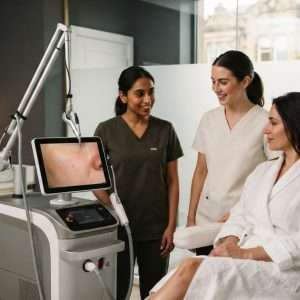
Cellulite is one of the most common skin concerns we see at Arden Clinic. It affects women of all shapes and sizes, and many men, regardless of fitness level or lifestyle. Yet despite how widespread it is, cellulite is still widely misunderstood.
It is often described simply as “fat under the skin”. In reality, cellulite reflects a series of structural changes beneath the surface involving connective tissue, collagen integrity, fat distribution and circulation. To understand why cellulite forms and why it can be resistant to creams and exercise alone, it helps to look more closely at the skin’s architecture.
This explores the structural foundations of cellulite in detail, providing a clearer and more reassuring understanding of what is happening beneath the surface.
The Skin’s Structural Architecture
The skin is not a single flat layer. It is a complex, layered organ designed to protect, regulate and support the body. Each layer plays a role in firmness, elasticity and surface texture.
Layers Of The Skin
Epidermis
The outermost layer provides barrier protection. It contributes to overall skin tone and texture, but is not the primary source of cellulite.
Dermis
Beneath the epidermis sits the dermis. This is the structural support layer, containing collagen and elastin fibres, blood vessels, and connective tissue. The dermis determines much of the skin’s strength and resilience.
Subcutaneous Layer
Below the dermis lies the subcutaneous tissue. This layer contains fat lobules, connective tissue bands and larger blood vessels. It plays a central role in the development of cellulite.
When the integrity of these layers is compromised, the skin’s surface may show visible irregularities.
The Role Of Fibrous Septae
One of the most important structural components involved in cellulite formation is the fibrous septae.
Fibrous septae are connective tissue bands that extend vertically between the skin and deeper structures. They anchor the skin to the underlying fascia and help maintain stability. In women, these bands tend to run more perpendicular to the criss-cross arrangement often seen in men.
Over time, several changes can occur:
- Septae may stiffen or shorten
- Tension may increase
- Collagen within the bands may become less flexible
As these bands pull downward on the skin, they create areas of tethering. When combined with upward pressure from underlying fat lobules, this tethering results in the characteristic dimpled appearance associated with cellulite.
This mechanical interaction is structural, not simply a matter of excess body fat.
Fat Lobules and Upward Pressure
Fat cells are a normal and essential part of human physiology. They provide insulation, energy storage and hormonal support. In the subcutaneous layer, fat cells are grouped into clusters known as lobules.
In cellulite-prone areas such as the thighs, buttocks and hips, these lobules can exert upward pressure against the dermis. This may occur due to:
- Hormonal influence
- Genetic distribution patterns
- Mild fat cell enlargement
- Reduced structural containment
When upward pressure from fat lobules meets downward tethering from fibrous septae, the skin surface can appear uneven.
It is important to recognise that even individuals with a low body fat percentage can develop cellulite. The structural arrangement of connective tissue plays a more significant role than overall weight.
Collagen Decline and Skin Integrity
Collagen is the primary structural protein within the dermis. It provides strength, thickness and support. From our late twenties onwards, collagen production gradually declines. This natural process affects not only the face but also the skin on the body.
As collagen levels decrease:
- Dermal thickness reduces
- Elasticity declines
- Structural support weakens
- Skin resilience diminishes
When the dermis becomes thinner and less supportive, the underlying fat lobules and septae irregularities become more visible. The skin’s surface may appear softer or less firm.
Lifestyle factors can influence the rate of collagen decline. Smoking, excessive sun exposure and reduced physical activity may accelerate structural changes. Hormonal fluctuations during pregnancy or menopause can also contribute.
At Arden Clinic, we approach this topic with balance. Collagen reduction is a normal part of ageing, not a personal failure. Understanding this process allows for more informed treatment decisions.
Circulation and Tissue Oxygenation
Microcirculation plays a subtle but important role in skin health. Adequate blood flow supports oxygen delivery, nutrient transport and waste removal within tissues.
Reduced microcirculation in cellulite-prone areas may contribute to:
- Fluid retention
- Tissue congestion
- Reduced oxygenation
- Changes in skin texture
Lymphatic flow also influences tissue quality. When lymphatic drainage is less efficient, mild swelling can make surface irregularities more visible.
Circulation alone does not cause cellulite, but it can influence its appearance. Supporting healthy blood flow and lymphatic function may improve overall skin quality.
Hormonal Influence On Connective Tissue
Hormones influence connective tissue strength and fat distribution. Oestrogen, in particular, affects collagen production, vascular health and fat storage patterns.
During puberty, pregnancy and menopause, hormonal shifts can alter the structure of subcutaneous tissue. This explains why cellulite often first appears during adolescence and may become more noticeable in later life.
Hormonal influence is one reason cellulite predominantly affects women. Structural differences in connective tissue arrangement and fat distribution contribute to higher prevalence.
Understanding hormonal impact helps remove stigma. Cellulite is often a reflection of natural biological processes rather than lifestyle choices.
Genetic Predisposition
Genetics strongly influence connective tissue structure, fat distribution and skin thickness. If close family members have visible cellulite, there is an increased likelihood that similar patterns will develop.
Genetic factors may determine:
- Septae orientation and density
- Collagen production rate
- Fat storage location
- Skin thickness
This explains why some individuals develop cellulite early, while others notice changes later in life.
At Arden Clinic, we prioritise reassurance. Cellulite is extremely common and frequently inherited. It is not a sign of poor health.
Progressive Structural Changes
Cellulite often develops gradually. Early stages may present as mild surface irregularity visible only when the skin is compressed. Over time, changes can become more apparent at rest.
Progression may involve:
- Increased septae stiffness
- Reduced dermal elasticity
- Greater fat lobule protrusion
- Decline in collagen support
These changes tend to occur slowly, influenced by ageing, hormones and genetics.
Recognising cellulite as a progressive structural process helps explain why quick fixes rarely deliver lasting improvement.
Cellulite Misconceptions
Despite its prevalence, cellulite remains surrounded by misinformation.
Cellulite Is Not Simply Excess Fat
Weight loss may reduce volume but does not alter the arrangement of the fibrous septae.
Topical Creams Cannot Restructure Connective Tissue
Creams may temporarily improve hydration, but cannot remodel deeper tissue architecture.
Exercise Improves Tone But Does Not Remove Septae
Strength training enhances muscle tone and supports circulation. It does not directly disrupt tethering bands.
Slim Individuals Can Have Cellulite
Structural factors are more important than overall body weight.
At Arden Clinic, we believe honest education builds trust. Managing expectations is part of responsible aesthetic practice.
Emotional and Psychological Impact
Although cellulite is medically harmless, it can affect confidence. Many patients express frustration that lifestyle changes have not improved the appearance of visible dimpling.
It is important to approach this concern without judgment. Body image is personal. Seeking improvement is not vanity. It is about feeling comfortable and confident.
Our role is to provide clear information and realistic options grounded in clinical evidence.
Structural Remodelling and Professional Treatment
Because cellulite involves multiple structural components, effective treatment typically requires a multi-factor approach.
Targeting a single element rarely produces significant improvement. Structural remodelling strategies may focus on:
- Stimulating collagen production
- Improving dermal thickness
- Reducing septae rigidity
- Supporting circulation
- Enhancing tissue quality
Modern aesthetic technologies aim to address these components simultaneously.
Radiofrequency energy has been widely studied for its ability to stimulate collagen within the dermis. Controlled thermal stimulation encourages fibroblast activity, promoting gradual structural reinforcement.
Mechanical energy technologies are designed to influence connective tissue bands and improve circulation.
Combining these approaches may offer greater improvement than isolated treatments.
A Positive Perspective On Cellulite
It is worth emphasising that cellulite is not a disease. It does not indicate poor health. It is a structural variation present in most women.
Treatment is optional. Many people choose to embrace natural texture. Others prefer to reduce its appearance. Both perspectives are valid.
At Arden Clinic, our focus is on informed choice, safety and natural-looking results.
EMTONE In Bradford With Arden Clinic
For patients seeking non-surgical improvement in skin texture and firmness, EMTONE is available at Arden Clinic in Bradford.
EMTONE combines radiofrequency energy with targeted mechanical pressure in a single treatment session. Radiofrequency stimulates collagen production in the dermis, improving skin thickness and elasticity over time. Mechanical pressure energy works within the subcutaneous layer, influencing fibrous septae and supporting circulation.
This dual approach is designed to address several structural factors involved in cellulite formation. Treatments are comfortable, require no downtime and are suitable for a wide range of skin types.
A consultation at Arden Clinic allows for individual assessment of skin structure, tissue quality and treatment suitability. We provide clear guidance based on clinical understanding and realistic outcomes.
Cellulite is common and structurally complex. With the right approach, improvements in firmness and texture are possible. If you are considering treatment, EMTONE in Bradford at Arden Clinic offers a professional, evidence-based option in a supportive clinical environment.
Related Articles
- Award Winning Body Treatments to Refine and Rejuvenate
- Most Cellulite Treatments Fall Short
- Advanced Body Treatments and Skin Care at Arden Clinic
- Bring the Spring back into your step this Winter
- Radiofrequency For Skin Tightening and Collagen Stimulation
Prefer an AI Summary?